Why Builders Outsource Painting: A Cost & Quality Comparison
In-house vs subcontracted painting for builders: the real cost, quality and risk trade-offs, and what makes a painting trade partner worth keeping.

Should builders do painting in-house or subcontract it?
Most builders subcontract painting to a trade partner rather than keep it in-house, because painting is specialised, labour-intensive, and sits late on the critical path; a reliable subcontractor delivers better quality and schedule certainty than carrying the trade internally. The real question isn't whether to outsource, it's how to choose a partner who delivers consistently, because an unreliable one (delays, callbacks, defects) costs far more than any rate saving.
The case for subcontracting painting
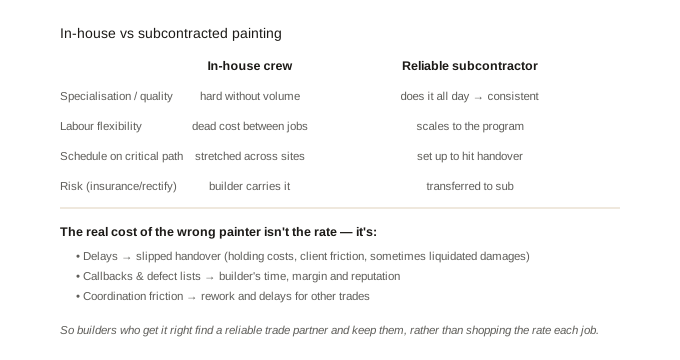
Specialisation and quality. Painting done well is a skilled trade, prep, product knowledge, finish quality, and (on the coast) coatings suited to the exposure. A dedicated painting business does it all day and brings that consistency; it's hard to match in-house without the same volume.
Labour flexibility. Painting demand is lumpy across a builder's pipeline. A subcontractor scales to the builder's program; an in-house crew has to be kept busy whether the pipeline suits or not, which is dead cost between jobs.
Schedule certainty on the critical path. Painting sits late in the build near practical completion, so reliability there protects handover. A good trade partner is set up to hit the program; an over-stretched in-house crew juggling multiple sites may not be.
Risk transfer. Insurance, safety, rectification and finish responsibility sit with the subcontractor, rather than the builder carrying it all internally.
Where the real cost is
Builders who choose a painter purely on rate often pay more in total, because the costs that hurt aren't in the quote:
Delays. A painter who doesn't show or slips the schedule pushes handover, and a delayed handover costs the builder in holding costs, client friction, and sometimes liquidated damages: far more than a slightly higher painting rate.
Callbacks and defects. A poor finish generates a defect list at handover and callbacks afterward, eating the builder's time, margin and reputation. Redoing work is the most expensive way to get it done.
Coordination friction. A painter who doesn't coordinate with surrounding trades or communicate creates rework and delays for others on site.
The cheapest painter on paper is frequently the most expensive once these are counted.
What makes a painting trade partner worth keeping
The builders who get this right find a painting partner and keep them, because a known-reliable trade partner is worth far more than shopping the rate each job. The qualities that matter:
- Reliability against the program: turns up when the schedule says, finishes on time, doesn't hold up completion.
- Consistent quality to standard: passes handover inspections without long defect lists or callbacks.
- Coordination and communication: works in with the supervisor and surrounding trades, flags issues early.
- Proper insurance, safety and documentation: set up for the builder's compliance requirements.
- Right systems for the job: including coastal-grade specification where the location needs it, so the builder isn't exposed to early coating-failure complaints from owners down the track.
The coastal angle for builders
For builders working the coast, there's an extra dimension: getting the coating specification right for the exposure protects the builder from future complaints. A coastal home handed over with generic finishes that fail in a few years can come back on the builder's reputation, even after the warranty period, as the owner's perception of build quality. A painting partner who specifies for the actual coastal exposure helps the builder hand over homes that hold up, which is reputation protection, not just a finish.
We work with builders as a reliable painting trade partner, hitting the program, finishing to handover standard, and specifying coastal-grade systems where the location calls for it. If you're after a painting partner you can plan around rather than shop each job, get in touch. See also our new build painting service.
Common questions
FAQs
Should builders subcontract painting or keep it in-house?
Most subcontract it, because painting is specialised and labour-intensive, demand across a builder's pipeline is lumpy, and it sits late on the critical path where reliability protects handover. A dedicated painting business brings consistency and scales to the program, where an in-house crew is dead cost between jobs and harder to keep at a consistent standard.
Isn't using the cheapest painter better for the builder's margin?
Usually not. The costs that hurt aren't in the quote, they're in delays (a slipped handover costs holding, client friction, sometimes liquidated damages), callbacks and defect lists (eating time, margin and reputation), and coordination friction. The cheapest painter on paper is frequently the most expensive once these are counted.
What should a builder look for in a painting subcontractor?
Reliability against the program, consistent quality that passes handover without callbacks, good coordination and communication with the supervisor and trades, proper insurance, safety and documentation, and the right coating systems for the job, including coastal-grade specification where the location needs it. Reliability matters more than the lowest rate.
Why do builders keep the same painting trade partner?
Because a known-reliable partner is worth far more than shopping the rate each job. Consistency, schedule certainty and quality reduce the builder's risk on the critical path and protect their reputation, while constantly switching to the cheapest option reintroduces the delay, callback and coordination risks that cost real money.
How does painting choice affect a builder's reputation on the coast?
A coastal home handed over with generic finishes that fail in a few years can come back on the builder's reputation, even after warranty, as the owner's perception of build quality. A painting partner who specifies coatings for the actual coastal exposure helps the builder hand over homes that hold up, protecting reputation, not just delivering a finish.