Choosing Colours That Last in Hard UV
Some exterior paint colours fade fast in Australian sun, others hold for years. How to choose coastal colours that last, and why darks fade first.
Why do some exterior paint colours fade so fast?
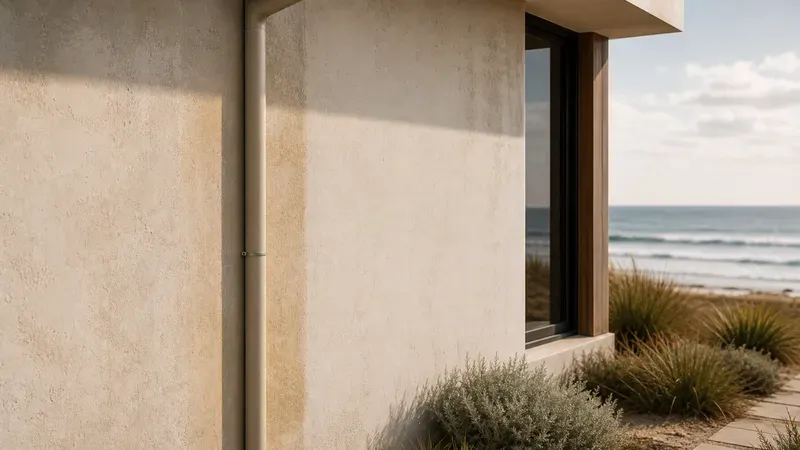
Some colours fade far faster than others because of how their pigments react to UV. Dark and vivid colours (deep reds, bright blues, charcoals) absorb more UV energy and break down sooner, while lighter, earthier, mineral-pigment colours hold up much longer. In Australia's intense sun, and on the coast where there's little shade and glare off water and sand, that difference is dramatic.
How UV fades paint
Fading is the sun breaking down two things: the pigments that give the colour, and the binder that holds the paint film together. UV energy literally breaks the chemical bonds. Darker colours absorb more of that energy (rather than reflecting it), so they heat up more and degrade faster. Some pigments are inherently less stable: many bright organic pigments fade quickly, while mineral and inorganic pigments (earthy tones, oxides) are far more UV-stable. On the coast you also get more reflected light off water and pale sand, and usually less tree cover, so surfaces take a heavier UV dose than an equivalent inland home.
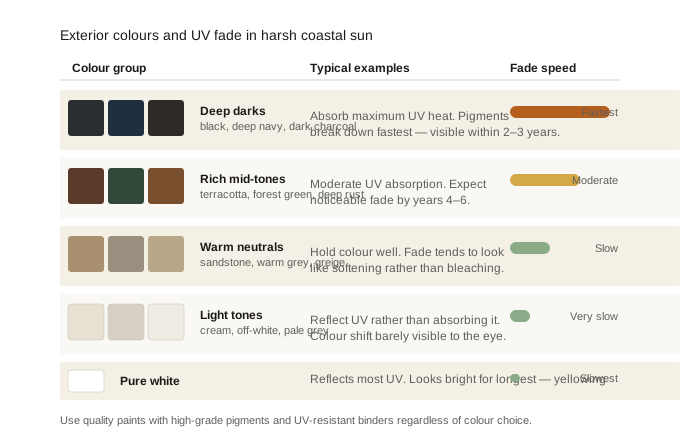
Which colours last, and which don't
As a general guide for hard-UV coastal exposure:
Hold up well: off-whites, creams, light greys, sandy and earthy tones, muted blues and greens. These reflect more UV and tend to use more stable pigments. They're also forgiving as they age, light colours fade evenly and subtly, so they look acceptable for longer.
Fade faster: deep reds and terracottas, bright/saturated blues and greens, strong yellows, and very dark colours including charcoals and near-blacks. Darks have a double problem: they absorb maximum UV and show fading badly, because uneven fade is obvious against a dark base.
The charcoal trend, a caution. Dark charcoal exteriors are popular, but they're the hardest colour to keep looking good in harsh coastal UV: they heat up, fade unevenly, and show every imperfection as they age. They can absolutely be done, but go in knowing they'll likely need refreshing sooner than a lighter scheme.
Beyond colour choice: what else affects fade
Colour is the biggest lever, but not the only one. Paint quality matters: premium exterior lines use more UV-stable pigments and binders than budget paint, so the same colour lasts longer in a better product (see best exterior paint for coastal homes). Sheen plays a small role, and exposure is huge: the walls facing the western sun and the open sea fade fastest, so a colour might hold beautifully on a sheltered elevation and tire quickly on the exposed one.
Choosing colours for a coastal home
The practical approach: lean toward lighter, earthier, muted tones for the main body (which suit coastal settings aesthetically anyway), and if you want drama, use the fade-prone darks and brights as accents (a door, trim, a feature) where they're smaller, easier to refresh, and less catastrophic when they age. Choose a quality paint in whatever colour you land on, and remember the most-exposed walls will always lead the fading. None of this means you can't have the colour you love, it means going in with eyes open about how it'll age, and planning maintenance accordingly.
Colour choice and exposure together decide how your home ages. A Salt Coast site visit factors in how exposed each elevation is, so your colour and paint choices suit the light your home actually gets, and a maintenance plan keeps the finish fresh between repaints.
Common questions
FAQs
Why does my exterior paint fade so quickly?
UV breaks down the pigments and binder in paint, and some colours are far more vulnerable than others. Dark and vivid colours absorb more UV and use less stable pigments, so they fade fast, especially in Australia's intense sun and on the coast where reflected glare and lack of shade increase the UV dose. Lighter, earthier colours and premium paints last much longer.
Which exterior colours last longest in the sun?
Off-whites, creams, light greys, and sandy or earthy muted tones hold up best, they reflect more UV and tend to use more stable mineral pigments, and they fade evenly so they look acceptable for longer. Deep reds, bright blues and greens, and very dark charcoals fade fastest and show it most.
Are dark charcoal exteriors a bad idea on the coast?
They're the hardest colour to keep looking good in harsh coastal UV, they absorb maximum heat and UV, fade unevenly, and show imperfections as they age. They can be done, but expect to refresh them sooner than a lighter scheme. Using dark tones as accents rather than the whole house is a good compromise.
Does paint quality affect fading?
Yes. Premium exterior paints use more UV-stable pigments and binders, so the same colour lasts noticeably longer in a quality product than a budget one. On the coast, where UV exposure is high, paying for the premium line is one of the better ways to slow fading, alongside choosing a more stable colour.
Will all walls of my house fade at the same rate?
No. The walls facing the western sun and the open sea take the heaviest UV and fade fastest, while sheltered elevations hold their colour much longer. This is why a house can look patchy over time, and why the most-exposed walls often need refreshing before the rest.