New Home Build Painting: Timeline & Standards
When painting happens in a new build, what standard to expect, and how to get coastal protection right from day one. A guide for builders and owners.

When does painting happen in a new home build?
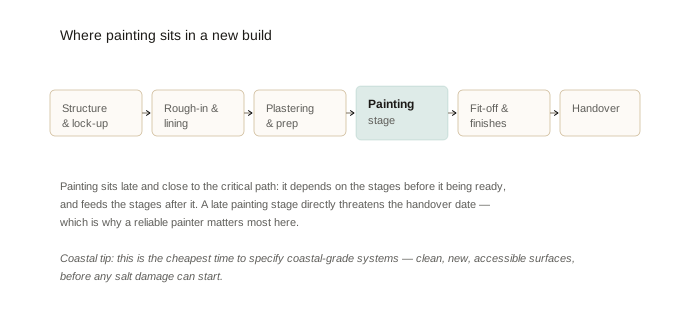
Painting is one of the later stages of a build (after the structure, lock-up, plastering and most internal fit-out, but before final fit-off and handover), so it sits close to the critical path to practical completion. Because it's near the end, a painting stage that runs late directly threatens the handover date, which is why reliability at this stage matters so much.
Where painting sits in the sequence
- Structure and lock-up: frame, roof, windows, external cladding/brickwork.
- Services rough-in and internal lining: wiring and plumbing rough-in, then plasterboard.
- Plastering and preparation: walls and ceilings set and prepared, the surfaces painting depends on.
- Painting stage: typically interior priming and coats around this point, exterior painting coordinated with external finishing.
- Fit-off and finishes: cabinetry, fixtures, flooring, final touch-ups.
- Practical completion and handover: final clean, defect check, handover.
The exact choreography (especially how painting interleaves with flooring and fit-off) is coordinated on site, but the principle is constant: painting is late, depends on the stages before it being ready, and feeds the stages after it.
What standard to expect at handover
New build painting should be completed to a standard fit for practical completion and handover: full, even coverage with no missed areas or flashing, neat cut-in and clean lines, properly prepared surfaces (so the finish doesn't fail early), and no defects that would show up on a handover inspection. A good painting stage doesn't generate a long defect list or callbacks, which cost the builder time and reputation. For owners, the handover inspection is the point to check the paint finish properly while it's easy to have addressed.
Getting coastal protection right from day one
For a new coastal home, the build is the single best opportunity to get protection right, and it's routinely missed. Builder-standard finishes are often specified to a generic standard, not to coastal exposure, so a new home a few hundred metres from the surf can be handed over with exterior coatings that aren't made for the salt it'll face. The result is premature coating failure and salt damage a few years in, remedial work that proper specification at build stage would have avoided. Specifying coastal-grade exterior systems and proper preparation while the surfaces are new, clean and accessible is the cheapest coastal protection a home will ever get. It's worth raising with the builder rather than assuming the standard spec suits the location.
Why this stage rewards a reliable painter
Because painting sits late and near the critical path, the cost of getting it wrong is disproportionate: a painter who slips the schedule pushes handover; one who leaves defects generates callbacks and inspection failures. For builders, the value of a reliable painting trade partner isn't a lower price, it's certainty that the stage gets done, on time, to standard, without becoming the thing that holds up completion. For owners, it's a finish that passes inspection and (on the coast) is actually built for the conditions.
We handle the painting stage as a reliable trade partner, quoting from plans, fitting the build program, finishing to handover standard, and specifying coastal-grade systems where the location calls for it. See our new build painting service, or for owners wanting to protect a new finish, a maintenance plan.
Common questions
FAQs
When does painting happen during a house build?
Late in the build, after structure, lock-up, services rough-in and plastering, but before final fit-off and handover. Interior painting generally follows plastering and is coordinated around flooring and fixture installation; exterior painting fits with external finishing. Because it's near the end, the painting stage sits close to the critical path to practical completion.
What standard should new build painting be at handover?
Fit for practical completion: full, even coverage with no missed areas or flashing, neat cut-in and clean lines, properly prepared surfaces, and no defects that would fail a handover inspection. A good painting stage doesn't generate a long defect list or callbacks. The handover inspection is the point for owners to check the finish properly.
Should a new coastal home get coastal-grade paint specified?
Yes, and it's often missed. Builder-standard finishes are frequently specified generically, not for coastal exposure, so a new home near the surf can be handed over with coatings not made for the salt. Specifying coastal-grade systems and proper prep at build stage, while surfaces are new and accessible, is the cheapest coastal protection a home will get, worth raising with the builder.
Why does the painting stage affect the handover date?
Because it sits late in the build and close to the critical path, it depends on the stages before it being ready and feeds the stages after it. A painting stage that runs late directly threatens practical completion, which is why a reliable painter who delivers on schedule matters so much at this point.
What should builders look for in a new build painter?
Reliability over lowest price: a painter who quotes from plans, fits the build program, delivers to handover standard without callbacks, and doesn't become the hold-up to completion. A painter who slips dates or leaves defects costs a builder far more than they saved on price, in delayed handovers and inspection failures.