How to Protect Metal Fixtures From Coastal Rust
Gates, railings, fixtures and hardware rust fast near the sea. How to protect outdoor metal from coastal corrosion, and keep it from coming back.
How do you protect metal fixtures from coastal rust?
You protect coastal metal by keeping salt off it and keeping it sealed. Salt air corrodes outdoor metal far faster than inland, so the defence combines corrosion-resistant materials, a sound protective coating, and regularly washing salt off before it eats through, the wash being the part most people skip and the one that matters most.
Why coastal metal rusts so fast
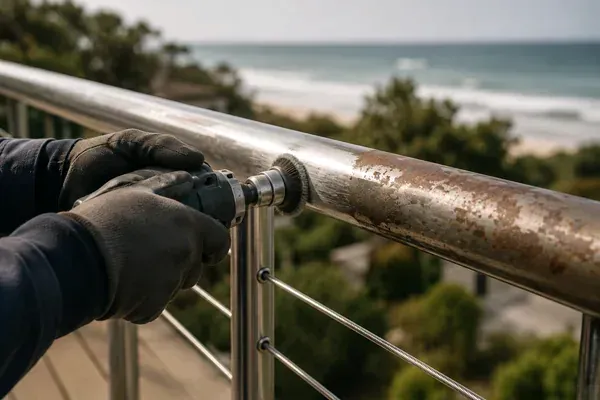
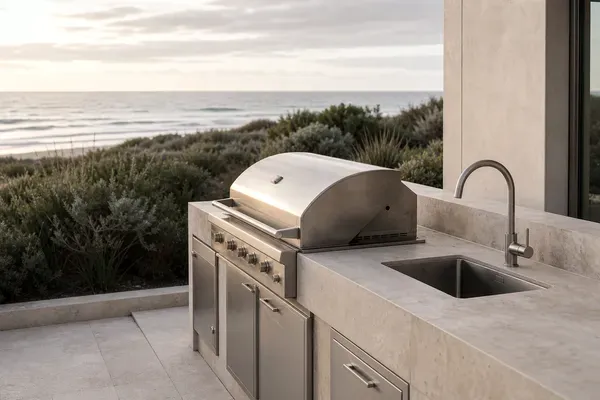
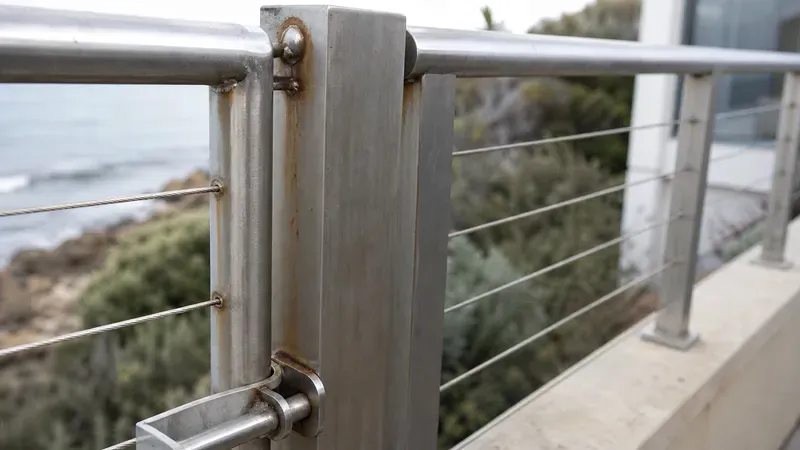
Rust is iron corroding, and salt accelerates it dramatically. Airborne sea salt settling on metal attracts moisture and provides chloride, which breaks down protective layers and speeds the chemical reaction that turns iron to rust. The same gate, railing or bracket that would last decades inland can show rust within a season or two near the surf. It's not poor quality, it's the environment, and it affects everything from steel gates and balustrades to fixings, hinges, light fittings and even "rust-resistant" stainless (which tea-stains on the coast, covered in detail in our guide on whether stainless steel rusts near the coast).
What rusts first, and where
The vulnerable points are predictable. Fasteners, screws and brackets often go first, because a single rusting bolt bleeds stains and can fail structurally. Edges, welds and scratches are next, anywhere the protective coating is thin or broken lets corrosion start. And sheltered spots that never get rinsed by rain (under eaves, behind panels, in corners) often corrode faster than exposed ones, because salt accumulates there undisturbed. Knowing these weak points is half of protecting against them, they're where to look first and treat first.
The three levers of rust protection
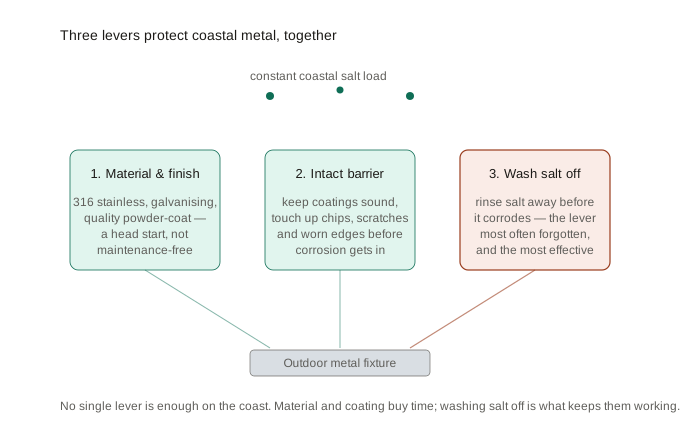
Protecting coastal metal comes down to three things working together, not any one alone:
Material and finish. Where you're choosing new fixtures, corrosion-resistant materials (marine-grade 316 stainless, hot-dip galvanised, quality powder-coating) buy you a big head start. But no material is maintenance-free on the coast, even the good ones need looking after.
An intact protective barrier. Most metal is protected by a coating, paint, galvanising, powder-coat, that keeps salt and moisture off the vulnerable metal. The moment that barrier is breached (a chip, a scratch, a worn edge), corrosion starts there and spreads underneath. Keeping the barrier sound, and touching up breaches early, is central.
Keeping salt off. This is the lever people forget. Even perfect materials and coatings sit under a constant salt load on the coast. Regularly rinsing and washing salt off outdoor metal removes the thing driving corrosion before it can do damage, and dramatically extends how long everything else lasts.
How to protect metal fixtures, step by step
- Rinse salt off regularly. A periodic fresh-water wash of gates, railings, fixtures and hardware, more often the closer to the surf, is the single most effective preventive step.
- Inspect the weak points. Check fasteners, welds, edges, and sheltered, un-rinsed areas for the first signs of rust or coating damage.
- Treat early rust before it spreads. Surface rust caught early is far easier to stop than established corrosion that's undermined the metal.
- Keep coatings intact. Touch up chips, scratches and worn spots in paint, galvanising or powder-coat promptly, that's where corrosion gets in.
- Re-protect on a schedule. Protective treatments don't last forever under coastal conditions, periodic re-coating or re-passivation keeps the barrier doing its job.
- Choose well when replacing. When fixtures do need replacing, corrosion-resistant materials and finishes suited to the coast pay off.
Why one-off treatment isn't enough
Coastal corrosion isn't a problem you solve once. Salt arrives continuously, so protection is a rhythm, not a single job: wash salt off before it bites, catch breaches and early rust before they spread, and re-protect periodically. Homes that keep their outdoor metal on that cadence avoid the expensive end-state, structural rust and full replacement, that homes relying on one-off treatments eventually hit.
Coastal metal doesn't have to rust out and need replacing. A Salt Coast maintenance plan keeps your gates, railings, fixtures and hardware washed, inspected and re-protected on a schedule matched to your home's exposure, so salt never gets the chance to do lasting damage.
Common questions
FAQs
How do I stop metal rusting near the ocean?
Keep salt off it and keep it sealed. Regularly wash salt off outdoor metal, keep protective coatings intact and touch up any chips or scratches early, treat surface rust before it spreads, and re-protect on a schedule. On the coast, regular washing to remove salt is the most effective single step.
Why do my gates and railings rust so quickly by the sea?
Because airborne sea salt settles on the metal, attracts moisture and provides chloride, which dramatically accelerates corrosion. Metal that would last decades inland can rust within a season or two near the surf. It's the salt environment, not poor quality.
What rusts first on coastal metal?
Usually fasteners, screws and brackets, plus edges, welds and any scratches where the protective coating is thin or broken. Sheltered spots that rain never rinses (under eaves, behind panels) also corrode fast because salt builds up there undisturbed.
Does stainless steel rust on the coast too?
Yes, even stainless tea-stains and corrodes near the surf, because salt breaks down the protective layer that normally keeps it stain-free. Our guide on <a href="/guides/does-stainless-steel-rust-coastal/">whether stainless steel rusts near the coast</a> covers this in detail. Marine-grade 316 resists it better than standard 304, but still needs maintenance.
How often should coastal metal be washed and re-protected?
It depends on how close you are to open surf, but coastal metal needs washing far more often than inland, and re-protecting periodically rather than once. The closer to the water, the more frequent both need to be. Treating it as an ongoing schedule rather than a one-off is what prevents lasting damage.