Maintenance Painting Schedules for Commercial Properties
Why commercial properties benefit from a planned painting schedule. How to budget repaints, protect the building, and avoid disruptive reactive jobs.
Why commercial properties should be on a painting schedule
For a commercial property, a planned painting maintenance schedule is almost always cheaper and less disruptive than reactive repainting. It protects the building fabric, spreads cost predictably, and lets work be scheduled around the operation rather than forced by a facade that's suddenly an embarrassment. A schedule turns painting from a periodic problem into a managed line item.
What a planned schedule actually does
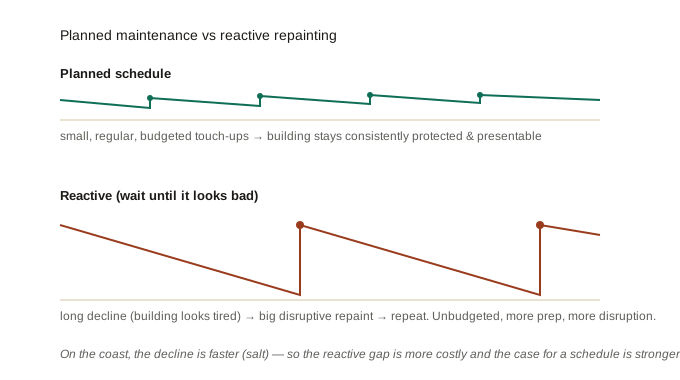
A commercial painting schedule isn't complicated, it's a planned cycle of inspection and maintenance painting matched to the building and its exposure, rather than waiting for visible failure. In practice it means:
Regular inspection: catching coating wear, corrosion, and early failure before it spreads, so problems are addressed small.
Maintenance painting on a cycle: refreshing and protecting surfaces before they fail, including the high-wear and high-exposure areas that go first.
Prioritised attention: exposed elevations, entranceways, and (on the coast) salt-hit metalwork get attention sooner than sheltered, low-wear areas, rather than always doing everything at once.
The result is a building kept consistently presentable and protected, instead of cycling between "fine" and "needs a big repaint."
Why reactive painting costs more
Leaving commercial painting until it's visibly needed is expensive in ways that aren't obvious:
The job is bigger. Failed coatings mean more preparation, repair of the now-exposed substrate, and sometimes corrosion or render remediation, not just a repaint.
The disruption is worse. A large reactive repaint done all at once disrupts trade, access and tenants more than smaller scheduled work done in planned windows.
The spend is unbudgeted. A sudden large repaint is an unplanned hit; scheduled maintenance is a predictable, budgetable cost.
The building suffers in between. A visibly tired commercial property reads as poorly run, affecting how customers, tenants and clients perceive the business, for the whole period it's left.
Setting a schedule for a coastal commercial building
On the coast, the case for a schedule is stronger, because salt accelerates everything. Coastal commercial buildings need more frequent attention to exposed coatings and, especially, to corroding metalwork (cladding, balustrades, fixtures, structural steel). For strata and multi-tenant buildings this is even more pressing: the governance and cost-sharing dynamics of body corporates make a planned schedule particularly valuable, as the strata salt damage guide explains. The right interval depends on the building's exposure, materials and use (a surf-front building works harder than a sheltered one), so a coastal schedule is set to the building's actual exposure rather than a generic cycle. The principle holds: address salt damage while it's maintenance, not once it's remediation.
Making it work operationally
The practical value of a schedule to a facility or property manager is operational as much as financial: work happens in planned windows you can coordinate around, spend is predictable for budgeting, the building's condition is known rather than discovered, and there's no scramble when the facade suddenly looks bad before an important moment. It turns building presentation from something that surprises you into something you manage. Our commercial painting service and a maintenance plan can put this on a managed footing.
We set commercial painting schedules to the building's actual exposure and your operational needs, so spend is predictable, disruption is planned, and the property stays presentable. A Salt Coast assessment maps the building and proposes a schedule that fits how you run it.
Common questions
FAQs
Why put a commercial property on a painting schedule?
Because a planned schedule is cheaper and less disruptive than reactive repainting. It protects the building fabric, spreads cost predictably for budgeting, and lets work happen in planned windows around your operation, rather than being forced by a facade that's suddenly an embarrassment. It turns painting from a periodic problem into a managed line item.
How often should a commercial building be repainted?
It depends on the building's exposure, materials and use, there's no single number. A sheltered inland building lasts longer between repaints than an exposed coastal one. The point of a schedule is to set the interval to the actual building rather than a generic cycle, and to maintain before failure rather than repaint after it.
Isn't reactive painting cheaper since you do it less often?
No, it usually costs more overall. Waiting for visible failure means bigger jobs (more prep, substrate repair, sometimes corrosion remediation), worse disruption (large repaints done all at once), and unbudgeted spend, plus the building looks poorly run in the meantime. Scheduled maintenance is smaller, planned, and predictable.
Why do coastal commercial buildings need more frequent attention?
Salt accelerates coating breakdown and, especially, corrosion of metalwork, cladding, balustrades, fixtures and structural steel. Coastal commercial buildings therefore need more frequent attention to exposed surfaces and metal, set to the building's actual exposure. Addressing salt damage while it's still maintenance avoids far costlier remediation later.
What does a commercial painting schedule involve operationally?
Regular inspection to catch wear and corrosion early, maintenance painting on a cycle to refresh surfaces before they fail, and prioritised attention to high-exposure and high-wear areas. For the manager, it means planned work windows, predictable budgeting, known building condition, and no scramble when the facade suddenly looks bad.