Strata Painting & Salt Damage: A Body Corporate Guide
A practical guide to painting and salt damage for coastal strata. What body corporates need to know about balconies, render, budgeting and scheduling.
What body corporates need to know about strata painting on the coast
For a coastal strata building, painting isn't just upkeep, it's protection of the common property the owners are collectively responsible for, and salt makes that responsibility more pressing. The key points for a body corporate: salt damages coastal buildings faster (especially balconies and metalwork), leaving it too long turns maintenance into expensive remedial work, and a planned, budgeted approach is cheaper and easier to get owners to approve than a reactive one.
Why coastal strata buildings are hit harder
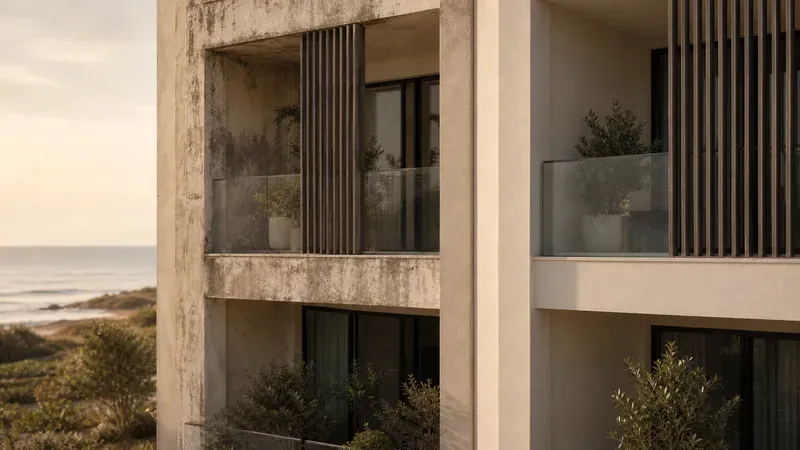
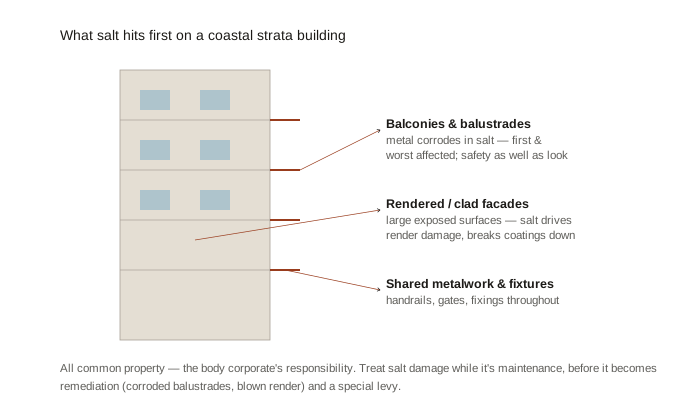
A coastal apartment building is one of the most salt-exposed structures going: tall, exposed on every side, no shelter, and built largely from the things salt attacks first. The high-risk elements:
Balconies and balustrades: metal railings and balustrades corrode in salt air, and even marine-grade stainless tea-stains and corrodes on a coastal building, which on a multi-storey building is both a cosmetic and a safety matter. These are usually the first and worst-affected elements.
Rendered and clad facades: large exposed surfaces where salt drives render damage and breaks coatings down, faster than on a sheltered inland building.
Shared metalwork and fixtures: handrails, gates, fixings and hardware throughout the common property, all corroding in the salt.
Because these are common property, their condition is the body corporate's responsibility, and their deterioration is the owners' collective cost.
The cost of leaving it
The expensive mistake in strata is treating painting as something you do only when the building looks bad. By then, salt has usually moved past cosmetic: balustrades are corroding (potentially a safety and compliance issue), render has blown and needs repair not just repaint, and metalwork may need replacement rather than treatment. What would have been routine maintenance becomes a major remedial project, with a special levy to match, which owners resent far more than predictable, budgeted upkeep. On the coast, deferred maintenance compounds faster than inland.
Why a planned schedule suits strata
Planned maintenance painting fits strata particularly well, for reasons that are as much about governance as building care:
It protects the building fabric: catching salt damage and corrosion early, while it's still maintenance rather than remediation.
It's budgetable: a planned schedule lets the body corporate spread cost predictably across years through the normal levy, rather than hitting owners with a large special levy when the building's suddenly failing.
It's easier to approve: a clear, costed, ongoing plan is an easier proposition to put to owners than a big reactive spend, and it demonstrates the committee managing the asset responsibly.
It protects property values: a well-kept complex holds its value and appeal; a visibly deteriorating one doesn't, which owners care about directly.
Getting strata painting approved and done well
The practical essentials for a body corporate: get a clear, itemised scope and fixed price (the documentation needed to approve works and plan levies); use a contractor who'll schedule around residents and communicate; ensure proper preparation and corrosion treatment (not just a cosmetic coat over salt-damaged surfaces, which fails fast); and ideally move from reactive repaints to a planned cycle, the approach that suits all commercial properties, as the guide to commercial painting maintenance schedules explains. The aim is to manage the common property as the asset it is, rather than lurching from one crisis repaint to the next.
We work with strata managers and committees across the coast, providing the clear scope and pricing owners need to approve, scheduling around residents, and treating salt damage properly rather than coating over it. A Salt Coast assessment can map the common property and set up a budgetable maintenance approach. See also our strata painting service.
Common questions
FAQs
Is the body corporate responsible for painting common property?
Generally yes, common property, building exteriors, common-area interiors, shared balconies and metalwork, is the body corporate's collective responsibility, funded through owner levies. Exact obligations vary with the scheme and by-laws, so check your specific arrangement. On the coast, that responsibility includes managing salt damage to these shared elements.
Why do coastal strata buildings need painting more often?
Because they're tall, fully exposed, and built from the elements salt attacks first, metal balustrades, railings and fixtures, plus large rendered or clad facades. Salt corrodes the metalwork and drives damage into render faster than inland, so coastal apartment buildings deteriorate sooner and need attention more often.
What happens if strata painting is deferred too long?
Salt damage moves past cosmetic: balustrades corrode (a safety and compliance concern), render blows and needs repair rather than just repainting, and metalwork may need replacing rather than treating. Routine maintenance becomes a major remedial project requiring a large special levy, which owners resent more than predictable, budgeted upkeep.
Why is planned maintenance better than repainting when it looks bad?
It catches salt damage and corrosion while it's still maintenance not remediation, lets the body corporate budget predictably through normal levies rather than facing a special levy, is easier to get owners to approve, and protects property values. On the coast, deferred maintenance compounds quickly, so planning ahead is both cheaper and lower-risk.
What should a body corporate ask for when getting strata painting quoted?
A clear, itemised scope and fixed price (to approve works and plan levies), resident-conscious scheduling and communication, and proper preparation and corrosion treatment rather than a cosmetic coat over salt-damaged surfaces. Ideally, the option to move from one-off repaints to a planned, budgetable maintenance cycle.