Roof Moss & Lichen: Why Coastal Roofs Grow It Faster
Coastal roofs grow moss and lichen faster, and it does real damage. Why it happens, why it matters, and how to remove it without wrecking the roof.
Why do coastal roofs grow so much moss and lichen?
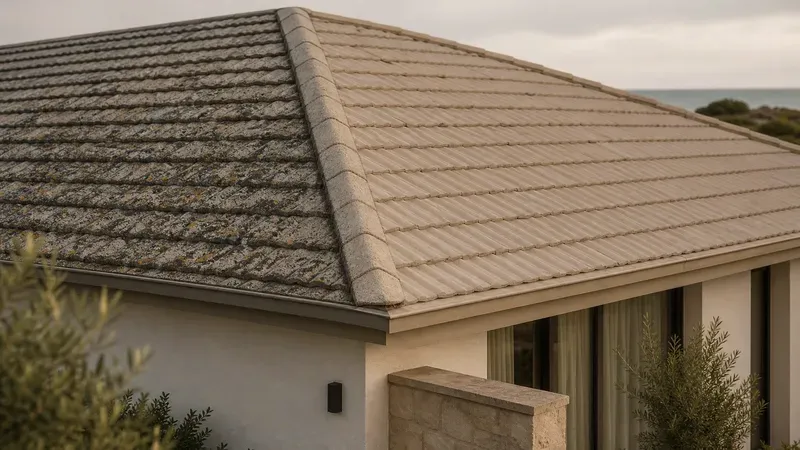
Coastal roofs grow moss and lichen faster than inland ones because the coast gives both the things they need: constant moisture and a grippable surface. Salt holds moisture on the roof, humidity keeps it damp, and shaded slow-drying sections plus weathered, porous tiles let the growth take hold. So coastal roofs green up faster and harder to keep on top of.
What moss and lichen actually are (and why roofs suit them)
Moss is a plant that holds water like a sponge; lichen is a tougher organism (part fungus, part algae) that grips hard onto surfaces and is far harder to remove. Both need moisture and a surface to anchor to, and a coastal roof is close to ideal: regularly damp, often shaded in parts, and over time increasingly porous as the tile or coating surface weathers. The growth usually starts on the shaded, south-facing or slow-drying slopes and spreads from there.
Why it's a real problem, not just a look
It's tempting to ignore moss as cosmetic, but on a roof it does genuine damage.
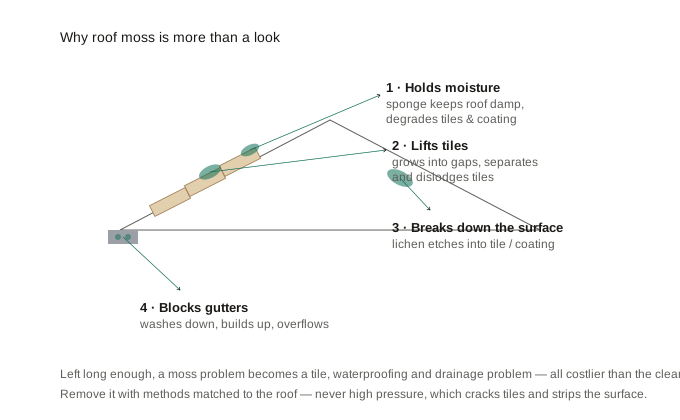
It holds moisture against the roof. Moss acts like a wet sponge sitting on your roof surface, keeping it damp long after rain. Constant dampness degrades tiles and coatings and works into the roof.
It lifts and separates tiles. Moss and lichen grow into the gaps and under the edges of tiles, and as they expand they can lift and dislodge them, opening paths for water.
It breaks down the surface. Lichen in particular etches into and breaks down the tile or coating surface it grips, accelerating the weathering that made the roof porous in the first place, a worsening cycle.
It blocks gutters and downpipes. Moss breaks loose and washes down into the gutters and drainage, where it builds up and causes blockages and overflow.
So left long enough, a moss problem becomes a tile problem, a waterproofing problem, and a drainage problem: all more expensive than the cleaning would have been. When a roof has deteriorated beyond what cleaning can fix, it's into roof restoration territory, which is a different job and a different cost.
How to remove roof moss and lichen (and how not to)
The right way is to kill and remove the growth with methods matched to the roof, not to blast it off with high pressure. High pressure feels effective and gives instant results, but on a roof it cracks and dislodges tiles, breaks up ridge pointing, drives water up under the tiles, and strips the protective surface, leaving the roof more porous and quicker to regrow. (This is the same reason high pressure is the wrong tool for most surfaces.)
Done properly, roof moss removal treats and clears the growth without that damage, and because lichen grips so hard, it often needs the right treatment rather than brute force to lift it cleanly. On a steep or high roof it's also genuinely dangerous work, which is the other reason it's usually a job for someone equipped for it rather than a DIY weekend.
Why it comes back, and how to stay ahead of it
On the coast, cleaning a roof doesn't stop the moss returning, because the moisture, salt and humidity that grew it are all still there. A cleaned roof left alone will green up again over the following seasons. Staying ahead of it means keeping it in check on a regular cycle, treating early regrowth before it re-establishes, so the roof never gets back to the heavy, tile-damaging state. That's far cheaper and easier than letting it build up and doing a big remedial clean every few years, and it's exactly the kind of recurring care a maintenance plan handles, the roof gets seen and cleaned on a rhythm that suits how fast yours actually grows.
Coastal roof growth is a manage-it problem, not a fix-it-once one. Roof work itself is not something Salt Coast takes on, but the salt and moisture feeding that growth are already working on your walls, render and metal fixtures. A Salt Coast site visit maps those while we're on site. No charge to assess, no obligation.
Common questions
FAQs
Why does my roof grow so much moss near the coast?
Coastal roofs get the two things moss and lichen need in abundance: moisture and grippable surface. Salt holds moisture on the roof, humidity keeps it damp, and shaded slow-drying slopes plus weathered porous tiles let growth take hold. So coastal roofs green up faster and more heavily than inland ones.
Is moss on the roof actually damaging?
Yes, it's not just cosmetic. Moss holds moisture against the roof surface, grows into and lifts tiles, breaks down the tile or coating surface (lichen especially), and washes into gutters and downpipes causing blockages. Left long enough it becomes a tile, waterproofing and drainage problem, all costlier than removing the moss.
Can I pressure-wash moss off my roof myself?
It's not advised. High pressure cracks and dislodges tiles, breaks ridge pointing, forces water under tiles, and strips the protective surface so the roof regrows moss faster, and roof work is dangerous. Proper roof moss removal uses methods matched to the roof, and on steep or high roofs it's a job for someone equipped for it.
What's the difference between moss and lichen on a roof?
Moss is a sponge-like plant that holds water; lichen is a tougher fungus-and-algae organism that grips hard and etches into the surface, making it much harder to remove. Both damage roofs, but lichen is the more stubborn and the more destructive to the tile or coating surface it clings to.
How do I stop moss coming back after cleaning?
On the coast you can't stop it permanently, the moisture, salt and humidity that grew it remain, so a cleaned roof left alone regrows over the seasons. The practical answer is keeping it in check on a regular cycle, treating early regrowth before it re-establishes, which stops the roof returning to the heavy, damaging state and is cheaper than periodic big remedial cleans.