Soft Washing vs Pressure Washing: Which Does Your Home Need?
Soft washing and pressure washing aren't the same. Which your home needs, when high pressure causes damage, and what's safe for coastal surfaces.
What's the difference between soft washing and pressure washing?
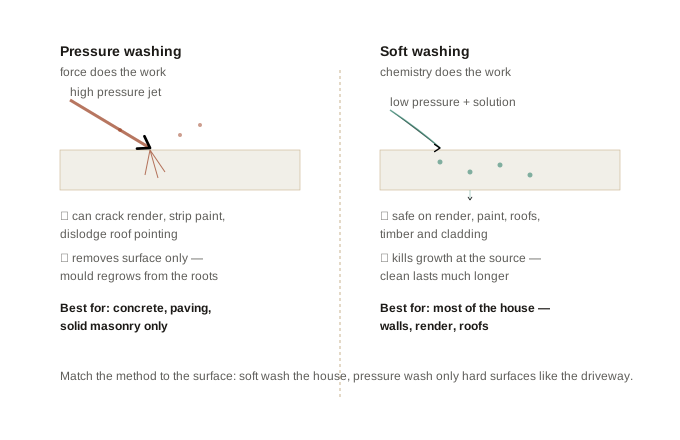
Pressure washing blasts surfaces clean with high-pressure water; soft washing uses low pressure and specialised cleaning solutions to kill mould, algae and grime at the source. The short version: pressure washing relies on force, soft washing relies on chemistry. Force can damage many home surfaces, so for most house exteriors soft washing is the safer and longer-lasting choice.
Pressure washing: force does the work
Pressure washing (sometimes called power washing when the water's heated) uses a high-pressure jet to physically blast dirt, grime and loose material off a surface. It's fast and satisfying on the right materials, hard surfaces that can take the force, like concrete driveways, paving and some masonry.
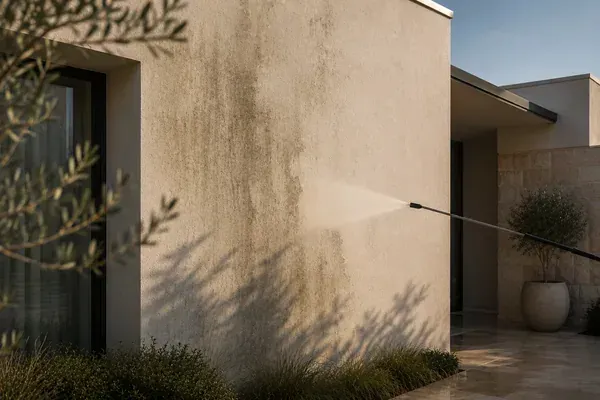
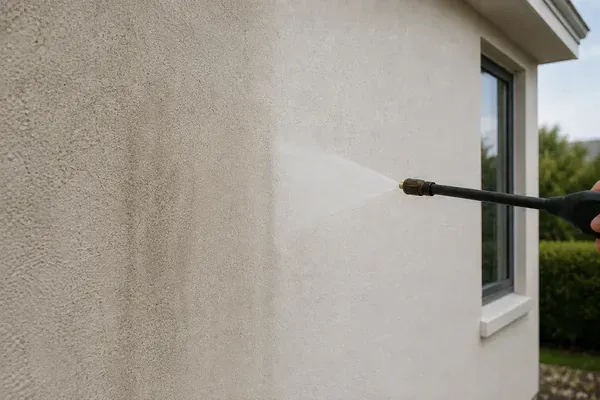
The problem is that the same force that strips grime also strips, gouges and drives water into surfaces that aren't built for it. On render, painted walls, timber, roof tiles and softer materials, high pressure can crack render, force water behind cladding, strip paint, etch timber and dislodge roof pointing. And it only removes what's on the surface, the mould or algae growing in a wall often grows straight back, because the roots were never killed.
Soft washing: chemistry does the work
Soft washing uses low pressure, around the force of a garden hose, combined with cleaning solutions designed to kill the organic growth (mould, algae, lichen, moss) and lift grime, then rinse away. Because it kills the growth at its source rather than just blasting the surface, the clean lasts much longer before it regrows. And because there's no damaging force, it's safe on the surfaces pressure washing threatens: render, painted exteriors, roofs, timber and most house cladding.
For the majority of a home's exterior, walls, render, roofs, soft washing is the method professionals reach for, and on roofs in particular, where moss and lichen need killing at the source, soft washing is the only method that doesn't risk cracking tiles or breaking ridge pointing. It's gentler on the building and the result lasts.
So which does your home need?
It's not really one-or-the-other; it's matching the method to the surface. As a rule of thumb: soft wash the parts of your home that are painted, rendered, or organic-growth-prone, walls, eaves, render, roofs, and most cladding. Pressure wash only hard, robust surfaces that can take it, concrete driveways, paving, and solid masonry, and even then at an appropriate pressure. A good wash of a whole property often uses both: soft washing the house, pressure washing the driveway.
The mistake to avoid is letting someone pressure wash your render or painted walls because it looks powerful and thorough. Powerful is exactly the problem on those surfaces.
Why this matters more on the coast
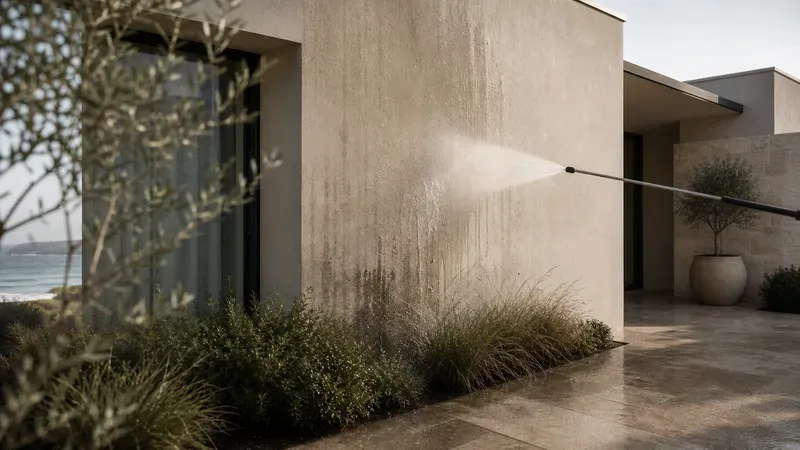
Coastal homes have two extra reasons to favour soft washing. First, salt, the regular washing that coastal exteriors need to remove salt buildup is washing you'll be doing often, so using a method that's safe to repeat matters; you don't want to be high-pressure-blasting your render several times a year. Second, coastal homes grow mould, algae and lichen faster (salt and humidity feed it), so the kill-at-the-source advantage of soft washing pays off more. Regular soft washing is the method that fits the ongoing salt removal coastal homes need without wearing the building out.
The right wash method protects your home as it cleans it. A Salt Coast maintenance plan keeps your exterior on a regular soft-wash schedule that removes salt and kills organic growth without the damage high pressure does to render, paint and roofs.
Common questions
FAQs
Is soft washing better than pressure washing?
For most house exteriors, yes. Soft washing uses low pressure and cleaning solutions that kill mould and algae at the source, so it's safe on render, paint, roofs and timber and the result lasts longer. Pressure washing suits hard surfaces like driveways but can damage softer building materials.
Will pressure washing damage my house?
It can. High pressure can crack render, strip paint, force water behind cladding, etch timber and dislodge roof pointing. It's safe on robust surfaces like concrete and paving, but for painted or rendered walls and roofs, soft washing is the safer choice.
What is soft washing?
Soft washing is exterior cleaning that uses low pressure, around garden-hose force, combined with specialised solutions that kill mould, algae, lichen and moss and lift grime, then rinse away. Because it kills growth at the source rather than just blasting the surface, the clean lasts much longer.
Can you soft wash a roof?
Yes, and on most roofs it's the right method. High pressure can dislodge tiles and pointing and strip protective surfaces, while soft washing kills the moss and lichen coastal roofs grow without that damage.
Do I need both for my home?
Often, yes. A typical whole-property wash soft washes the house itself, walls, render, eaves and roof, and pressure washes hard surfaces like the driveway and paving. The method is matched to each surface rather than using one approach everywhere.