How Often Should You Repaint a Coastal Home?
Coastal homes need repainting more often than inland ones. How long exterior paint really lasts near the ocean, and how to make it last longer.
How often should you repaint a coastal home?
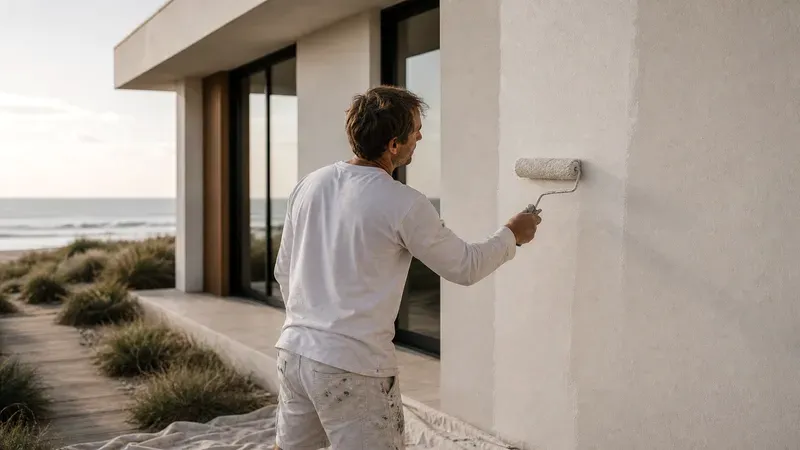
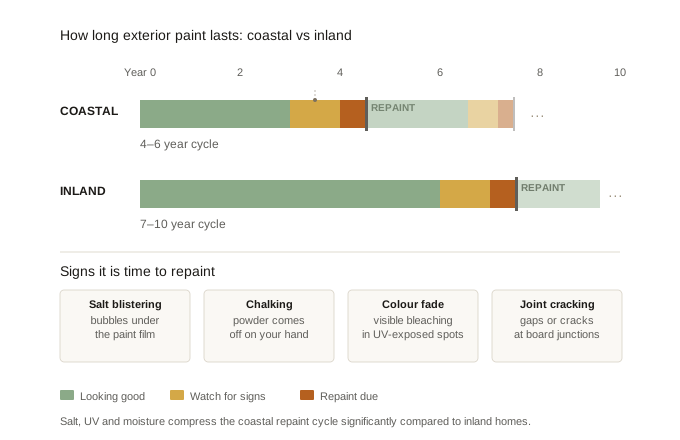
Coastal homes generally need repainting every 5 to 10 years, against 10 to 15 for inland homes, with front-line, surf-facing properties at the shorter end. The range is wide because exposure varies: how close you are to the surf, which way the walls face, and how well the paint was prepared and maintained all change the number. The honest answer isn't a fixed year, it's "when the paint tells you."
Why coastal paint doesn't last as long
The same three forces that make coastal paint hard to choose also shorten its life: salt breaking the bond from underneath, intense UV breaking down the binders and fading colour, and constant moisture stressing the film. Inland, paint mostly just fades slowly. On the coast it's actively under attack, so it reaches the point of needing redoing years sooner. None of that is a fault in the paint; it's the environment doing what it does to any coating.
What changes your repaint cycle
A few things move you within (or beyond) that 5–10 year range:
Distance from the surf is the biggest factor. Front-row, surf-facing homes cop the heaviest salt load and repaint most often. Homes a few kilometres back or sheltered behind terrain last longer.
Which walls matter, the elevations facing the prevailing sea breeze and the western sun weather fastest, so sometimes it's specific walls that need attention rather than the whole house at once.
Prep and paint quality: a job done over properly prepared surfaces with a quality coastal system lasts markedly longer than one painted over salt with budget paint. The original job's quality echoes for a decade (see best exterior paint for coastal homes).
Maintenance: this is the big lever you control after the fact. Regular washing to remove salt dramatically slows paint breakdown, which can stretch a repaint cycle out by years.
How to tell when it's actually time
Rather than counting years, read the paint:
Fading and chalking: when colour has dulled and a chalky residue rubs off on your hand, the binder is breaking down and the paint is near the end of its protective life.
Cracking, flaking or peeling: the clear signal the bond is failing. On the coast this often starts in sheltered spots that don't get rinsed by rain, and around any metal that's corroding. Once you see peeling, the surface underneath is exposed and the clock is ticking.
Bare or thin patches: where the coating has worn through, the surface is no longer protected and moisture and salt are getting in.
Catching it at the fading/chalking stage and repainting then is far cheaper than waiting for widespread peeling, because once water gets behind failed paint you're often into repairing the surface underneath, not just repainting.
How to make a coastal repaint last longer
The single most effective thing is keeping salt washed off. Salt sitting on paint accelerates everything that ages it, so regular washing slows the whole process and pushes the next repaint further out. Beyond that: a quality system over proper prep at the outset, dealing with any corrosion or salt damage before it spreads under the paint, and touching up high-wear areas before they fail completely rather than waiting for a full repaint. Together these can meaningfully extend the cycle, which is the whole logic of maintaining rather than just repainting.
A coastal paint job lasts longest when it's washed and watched, not left until it's peeling. A Salt Coast maintenance plan keeps salt off your paint and flags wear early, so you repaint less often and never get caught by surfaces failing underneath.
Common questions
FAQs
How often should I repaint my house if I live near the beach?
Generally every 5 to 10 years, with front-line surf-facing homes at the shorter end and more sheltered ones lasting longer. That's sooner than the 10 to 15 years typical inland, because salt, UV and moisture attack coastal paint far harder. Regular washing to remove salt can stretch the cycle out.
Why does coastal paint need redoing so often?
Because salt, intense UV and constant moisture actively break paint down, salt lifts the bond from underneath, UV degrades the binders and fades colour, and moisture stresses the film. Inland paint mostly just fades slowly; coastal paint is under continuous attack, so it reaches the end of its protective life years sooner.
How do I know when it's time to repaint?
Read the paint, not the calendar. Fading and chalking (a chalky residue rubbing off) means the binder is breaking down. Cracking, flaking or peeling means the bond is failing. Bare or worn-through patches mean the surface is no longer protected. Repainting at the fading stage is far cheaper than waiting for peeling.
Can I make a coastal paint job last longer?
Yes, significantly. Keeping salt washed off is the biggest lever, salt sitting on paint accelerates ageing. A quality system over proper prep at the start, dealing with corrosion or salt damage early, and touching up high-wear areas before they fail all help. Regular maintenance can add years to the cycle.
Should I repaint the whole house or just some walls?
Often just some walls. The elevations facing the sea breeze and western sun weather fastest, so they may need attention while sheltered walls are still sound. Repainting the worst-exposed surfaces as they need it, rather than always doing the whole house, can be more cost-effective on the coast.