Why Paint Peels Faster Near the Ocean
Salt air makes coastal paint peel, blister and flake years early. Here’s why exterior paint fails near the sea, and how to stop it coming back.
Why does paint peel faster near the ocean?
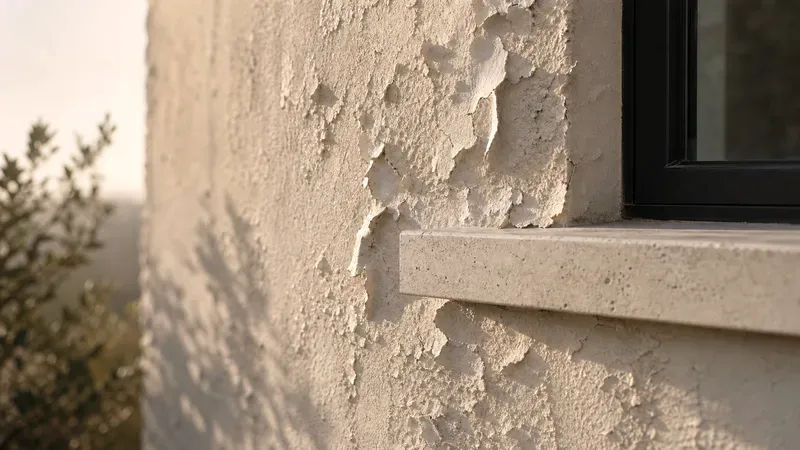
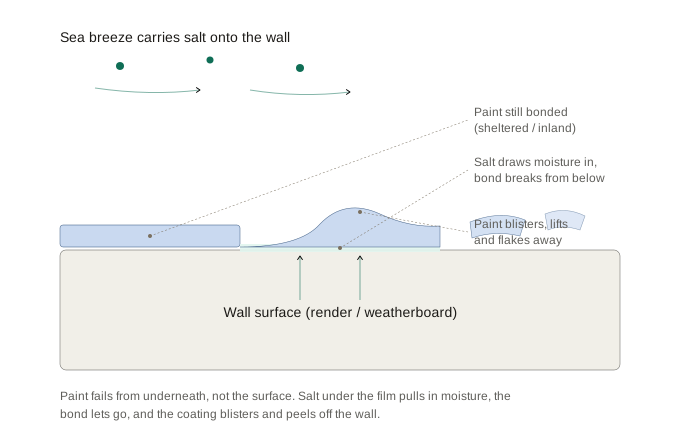
Salt air is the reason. Wind-blown salt settles on exterior walls and pulls moisture from the air, keeping the surface under the paint damp. That trapped salt and moisture break the bond between paint and wall from underneath, so the coating blisters and flakes years earlier than it would inland. It's the coast, not bad paint.
Paint doesn't fail from the top down
The thing most people get wrong about peeling paint is assuming it wears away from the surface, like it's been scrubbed off by weather. It usually fails the other way, from underneath. Paint sticks by bonding to the surface it's laid on. Anything that gets between the paint and that surface, or stops the surface holding the paint, breaks the bond and the coating lets go. On the coast, that "anything" is salt and the moisture it brings.
What salt actually does to the bond
Salt is hygroscopic, which means it pulls water out of the air. When wind carries salt off the ocean and deposits it on your walls, it sits there attracting moisture, even on a dry day. That moisture works into the surface beneath the paint film. A few things follow:
The damp surface stops new paint curing and bonding properly in the first place, so a coastal repaint that wasn't prepared for salt can start failing within a year or two rather than lasting its full life. Where paint is already down, salt drawn through to the surface crystallises and physically pushes the coating off, the blistering and flaking you see, the same crystallisation that causes salt damage on rendered walls. And salt accelerates corrosion of anything metal under or behind the paint (nail heads, flashings, reinforcement), which lifts the paint from those points outward as rust stains bleed through, the same coastal corrosion that affects exposed metal fixtures.
This is why the same paint, applied the same way, lasts far longer ten kilometres inland than it does in sight of the surf.
Why coastal homes specifically suffer
Two things make the WA coast harder on paint than most people expect. First, you don't need to be beachfront: salt carries a long way on the prevailing sea breeze, so homes well back from the water still cop a steady salt load. Second, the spots that fail first are often the sheltered ones, walls under eaves or in corners that rain never reaches. Rain actually rinses salt off exposed walls; the sheltered faces just accumulate it, so they're frequently where peeling starts, which catches owners by surprise.
Is it the painter's fault?
Usually not, though it gets blamed on the last paint job. Peeling on the coast is far more often about preparation and environment than about the painter cutting corners. Paint applied over a salt-contaminated surface, or without the surface being washed down and the salt removed first, will fail no matter how good the paint or the brushwork. The fix isn't just "better paint", it's removing the salt, preparing the surface correctly, and then keeping salt from rebuilding to the point where it breaks the bond again.
How to stop coastal paint peeling
- Wash the salt off before anything else. A proper exterior wash to remove salt, dirt and any loose paint is the single most important step, and the one most often skipped. Paint laid over salt is paint that will peel.
- Treat any salt damage and corrosion underneath, rust on fixings or flashings has to be dealt with or it lifts the new paint from below.
- Prepare the surface correctly for coastal conditions, sound substrate, right primer, right system for the exposure.
- Use a paint system suited to the coast, not just any exterior paint. The product matters, but it's the third lever, not the first.
- Keep salt from rebuilding. This is the part one-off jobs miss. A regular exterior wash stops salt accumulating to the level where it breaks the bond again, which is exactly why coastal homes do better on a maintenance schedule than on a repaint-and-forget cycle.
The honest truth about coastal paint
Near the ocean you don't paint once and forget it, you manage it. The salt never stops arriving, so the homes that stay looking right are the ones kept on a rhythm: washed regularly so salt never builds up, with repainting done on the surfaces that need it rather than the whole house at once when it's already failing. That ongoing care is far cheaper than stripping and repainting a peeled exterior every few years. (When it is time to repaint, our guides on the best exterior paint for coastal homes and how often coastal homes need repainting cover what to use and when.)
Coastal paint doesn't have to peel on a three-year cycle. A Salt Coast maintenance plan keeps salt washed off before it breaks the bond, and catches early paint failure on the surfaces that need attention, so your exterior is maintained on a schedule instead of stripped and redone after it's already gone.
Common questions
FAQs
Why does exterior paint peel near the sea?
Salt blown off the ocean settles on walls and attracts moisture, keeping the surface under the paint damp. That trapped salt and moisture break the bond between the paint and the wall from underneath, so the coating blisters and flakes years earlier than it would inland.
Is peeling paint the painter's fault?
Usually not. Coastal peeling is far more often caused by salt on the surface and the marine environment than by poor workmanship. Paint applied over a salt-contaminated surface will fail regardless of how well it was applied, which is why washing the salt off and preparing the surface properly matters more than the paint brand alone.
How long should exterior paint last on a coastal home?
It varies with exposure, but coastal exteriors generally need attention noticeably sooner than inland homes. The closer to the surf and the more salt a wall collects, the shorter the interval, which is why regular washing to remove salt extends the life of the paint significantly.
Why is the paint peeling in shaded areas but not in the sun?
Because rain rinses salt off exposed, sun-facing walls, while sheltered areas under eaves or in corners never get rinsed and quietly accumulate salt. Those sheltered faces are often where coastal peeling starts, even though they look the most protected.
Can you just paint over peeling paint near the coast?
No. Painting over peeling or salt-contaminated paint just traps the problem and the new coat fails too. The salt and loose paint have to be washed and prepared off first, then the surface treated and repainted correctly, or the peeling returns quickly.