Deck Oiling vs Staining vs Sealing
Oil, stain or seal your deck? The real differences in look, protection and upkeep, and which suits a coastal timber deck best.
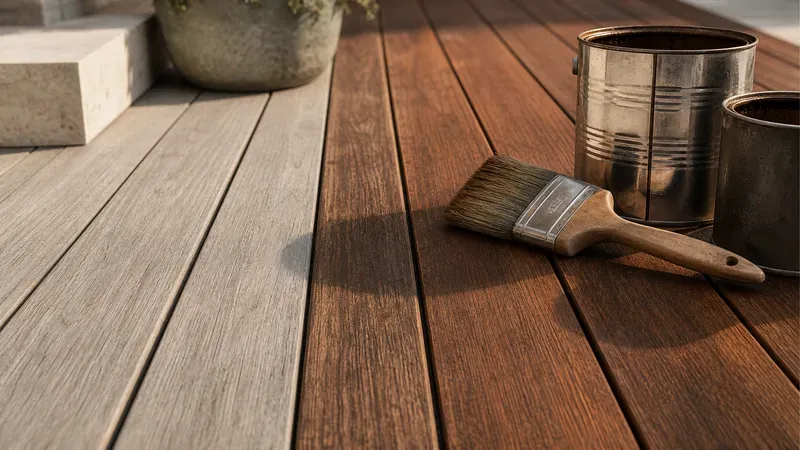
Should you oil, stain or seal your deck?
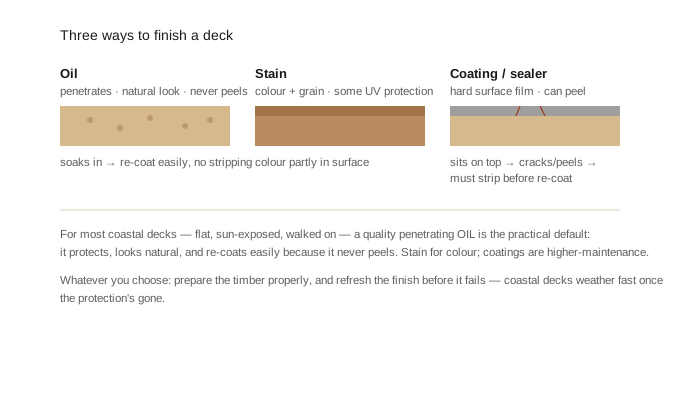
The three options protect and look different: oil penetrates the timber, looks natural and re-coats easily without peeling; stain adds colour and a bit more protection while still showing the grain; and film-forming sealers sit on the surface as a harder, longer-lasting barrier that can, however, peel. For most coastal timber decks a quality penetrating oil is the practical choice (easy to maintain and won't peel), but the right answer depends on your timber, the look you want, and how the deck's used.
Oil: penetrates and nourishes
Decking oil soaks into the timber rather than sitting on top. It nourishes the wood, brings out the natural grain and colour, and gives that classic warm timber look. Its big practical advantage is maintenance: because it penetrates rather than forming a surface film, it doesn't peel or flake: when it wears thin you just clean and re-coat, no stripping back. The trade-off is that it offers less of a hard protective barrier than a film coating and needs re-coating more often. For a coastal deck that's walked on and sun-exposed, that easy re-coatability is usually worth more than maximum barrier.
Stain: colour plus protection
Deck stain adds colour (from a light tint to a solid, more opaque finish) while giving more protection than oil alone, including UV protection that helps slow the greying (the same harsh coastal UV that fades exterior paint, covered in the guide to choosing colours that last in hard UV). Lighter, semi-transparent stains still show the grain and behave a bit like a tinted oil; heavier, solid stains hide more of the timber and act more like a coating. Stain is a good middle ground if you want to change or deepen the colour and get decent protection, just match how opaque you go to whether you want to keep seeing the timber.
Sealer / coating: a surface barrier
Film-forming sealers and coatings sit on top of the timber as a harder, more water-resistant barrier, and they can last longer between coats. The catch is the catch with all film finishes on a deck: foot traffic, movement and moisture eventually make them crack and peel, and once they peel you have to strip them back before re-coating, a much bigger job than re-oiling. On a high-traffic, sun-and-salt-exposed coastal deck, a film coating can be harder to keep looking good than a penetrating finish.
Which is best for a coastal deck?
For most coastal timber decks, a quality penetrating oil is the sensible default: it protects, looks natural, and is easy to maintain because it never peels: you just re-coat. A stain is the pick if you specifically want colour or a bit more UV protection. A film coating suits some situations but is the higher-maintenance choice on an exposed, walked-on deck, because peeling means stripping. Whatever you choose, the timber has to be properly prepared first, and the finish refreshed before it fails, because on the coast the deck weathers fast once the protection's gone. (This is exactly the restoration and sealing work a neglected deck ends up needing.)
The right deck finish depends on your timber and how the deck lives. A Salt Coast site visit assesses your deck and recommends the finish that'll look right and stay easy to maintain, then keeps it on a refresh cycle so it never weathers back to grey.
Common questions
FAQs
Is it better to oil or stain a deck?
It depends what you want. Oil penetrates, looks natural, and is easy to maintain because it never peels, just re-coat. Stain adds colour and a bit more UV protection while still showing grain if semi-transparent. For a natural look and easy upkeep, oil; for colour or extra UV protection, stain. Both are good choices for coastal decks.
What's the difference between sealing and oiling a deck?
Oiling penetrates into the timber and never peels, so it's easy to re-coat. A film-forming sealer or coating sits on top as a harder barrier that lasts longer between coats but can crack and peel, and peeling means stripping it back before re-coating. On a high-traffic coastal deck, the easy-maintenance penetrating finish is often more practical.
What's the best decking oil for the coast?
A quality penetrating decking oil with good UV protection suits coastal decks, the UV resistance slows greying, and the penetrating nature means easy re-coating. Rather than a single brand, look for a premium oil rated for exterior or harsh exposure. The bigger factor is preparing the timber properly and re-coating before the finish wears through.
How often do I need to re-oil a coastal deck?
More often than inland, because the deck is flat, fully sun-exposed, walked on and hit by salt. The interval depends on the product, timber and exposure, but coastal decks need regular refreshing. The good news with oil is that re-coating is easy (clean and re-apply, no stripping), so staying on top of it is low-effort if you don't let it fully weather.
Can you change from a coating to an oil (or vice versa)?
Yes, but it needs proper preparation. Going from a peeling film coating to a penetrating oil means stripping the old coating back to bare timber first so the oil can penetrate. Going the other way also needs the surface prepared correctly. It's very doable as part of a deck restoration, just not a simple coat-over.