Deck Sealing & Restoration for Coastal WA Homes
Salt Coast is a deck sealing & restoration service launching October 2026, working across Perth and the WA coast. Deck sealing and restoration across Perth and the WA coast. We bring greyed, weathered timber decks, including WA hardwoods like jarrah and merbau, back and protect them against coastal sun and salt.
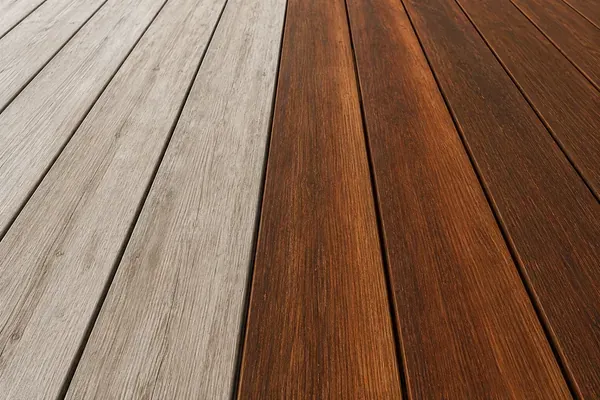
Why coastal decks grey and split
Timber decks weather faster on the coast for the same reasons everything does: intense UV and salt-laden air, plus the deck's own exposure, flat, horizontal, fully in the sun, walked on constantly. UV bleaches the timber grey and breaks down its surface; the wet-dry cycle of coastal weather makes boards expand, contract, cup and split; and salt dries the timber out and works into the grain. An unsealed or long-neglected deck doesn't just look bad, the timber itself degrades, and once boards have split and silvered badly, restoration is harder and some boards may be past saving.
How we restore and seal a deck
Assess the timber
Check the deck's condition, how far the weathering has gone, whether boards need replacing, and what finish suits the timber and use.
Clean and prepare
Remove the greyed surface layer, grime, salt and old failed finish, and sand back where the timber needs it, the prep that decides how well the new finish takes and lasts.
Repair
Address splintered, cupped or damaged boards and fixings before finishing.
Seal or oil
Apply the right finish for the deck, enough coats, worked into the timber for real protection rather than a thin surface film. See our deck oiling vs staining guide for finish options.
How we work with you
Honest advice, not an upsell.
We tell you what your home actually needs, and what it doesn't. If something can wait, we'll say so. We'd rather build a long relationship than win one oversized job.
We treat the cause, not just the surface.
Most coastal problems come back because they were patched, not fixed. We work out what's actually driving the damage (salt, moisture, corrosion) and deal with that, so the repair lasts.
A proper look before any quote.
We assess your property in person before we put a number on anything. It's free, there's no obligation, and it's the only honest way to quote coastal work, because every home is exposed differently.
The coast is all we do.
We're not generalists who also do beach houses. Coastal salt, corrosion and weather are our entire focus, which is why we catch the things others miss.
Built for the coast.
Anyone can paint a wall or wash a house. The coast is different: salt gets into render, corrodes metal from the inside, and breaks down coatings from underneath, and it never stops. Treating coastal problems like inland ones is why so much work fails early.
Salt Coast exists for exactly this. We diagnose before we treat, use methods and materials suited to coastal exposure, and build ongoing maintenance relationships rather than one-off jobs. That's how a coastal home stays sound instead of lurching from one repair to the next.
Keep your home ahead of the coast, not chasing it.
You wait for paint to peel, render to bubble, metal to rust, then react to damage that's been spreading for months.
We catch it before it shows, while every fix is still small, cheap and quick, and you never lift a finger to manage it.
Fremantle based. Dawesville to Two Rocks.
We service the Western Australian coastal corridor from Dawesville in the south to Two Rocks in the north, from the beachfront to roughly 10km inland. Deck Sealing & Restoration is available across the full service area.
Other services worth considering
FAQs
Can a greyed, weathered deck be brought back?
In most cases yes. The grey is a weathered surface layer; cleaning and sanding it back usually reveals sound timber underneath, which is then restored and sealed. Badly split or rotted boards may need replacing, but a deck that just looks greyed and tired is normally very restorable.
What's the difference between oiling, staining and sealing a deck?
They protect and look different: oils penetrate and nourish the timber with a natural look and are easy to re-coat; stains add colour and some protection; film-forming sealers and coatings sit on top for a harder wearing finish but can peel. The right choice depends on your timber, the look you want and how the deck is used.
Deck oiling, staining or sealing: the differences and which to choose
How often does a coastal deck need re-oiling or re-sealing?
More often than an inland deck, because the deck is flat, fully sun-exposed, walked on and hit by salt. The exact interval depends on the finish, the timber and the exposure, but coastal decks generally need refreshing regularly, and re-coating before the finish fails is far easier than restoring a deck that has weathered back to grey.
Why does my deck go grey and rough?
UV bleaches and breaks down the timber surface, turning it grey, while the coastal wet-dry cycle and salt dry the timber out and make boards cup, split and splinter. An unsealed or long-unmaintained deck weathers this way; restoring and sealing it brings the colour and smoothness back and protects it from doing it again.
Do you replace damaged deck boards too?
Yes, where boards are split, rotted or beyond restoring, they are replaced as part of the restoration. The aim is a sound, smooth, properly finished deck, so anything that cannot be brought back is dealt with rather than just coated over.
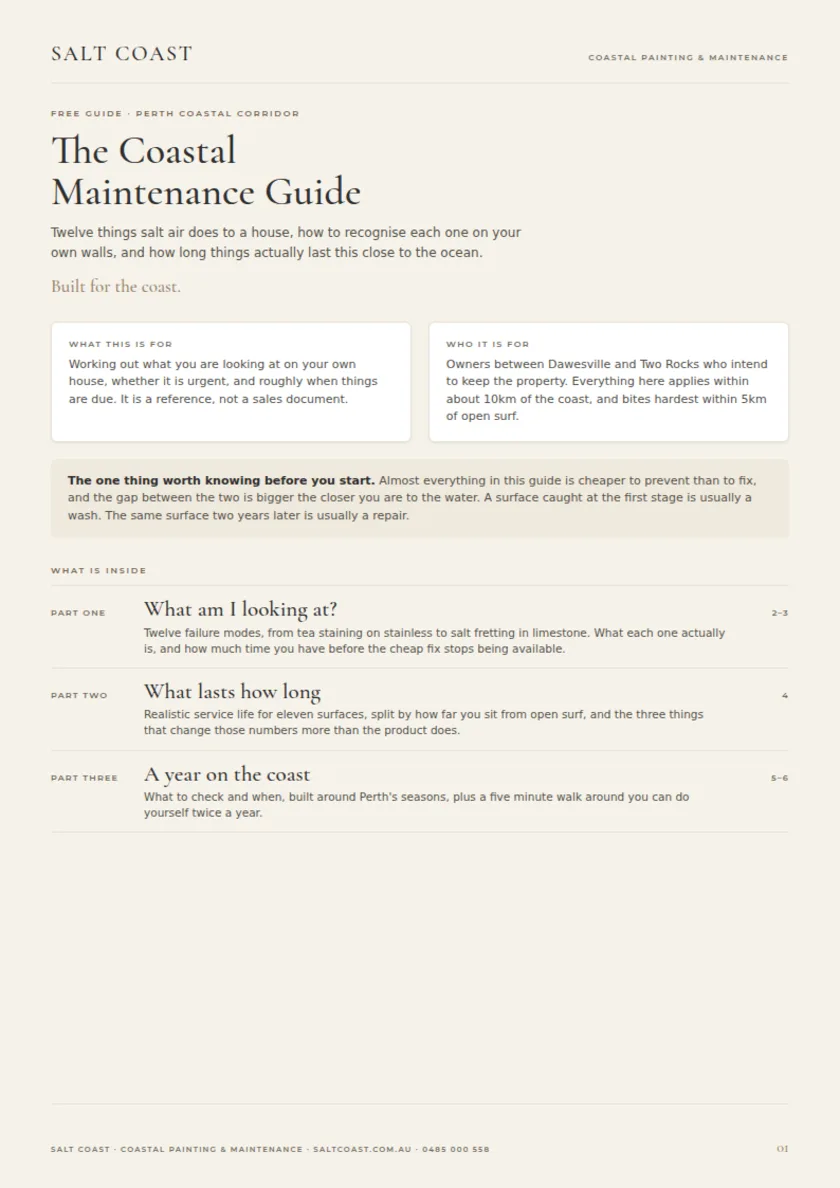
The Coastal Maintenance Guide
Six pages on what salt, sun and driven rain actually do to a coastal home, what to look for on your own walls, and roughly how long you have before each one turns into a repair.
We email the guide, then occasional coastal maintenance reminders, no more than a few times a year. Reply to any of them to stop. See our privacy policy.
Launching October 2026.
Register now and you're first in line when site visits start. No obligation — and we'll keep you posted.
Thank you.
You're on the list. We'll confirm by email, keep you posted as launch approaches, and your property will be among the first contacted when visits begin in October 2026.