Bore Water Stain Removal: Complete Guide
Orange bore water stains on walls, fences and paths come from iron in the water. How to remove reticulation rust stains, and how to stop them.
What causes orange bore water stains?
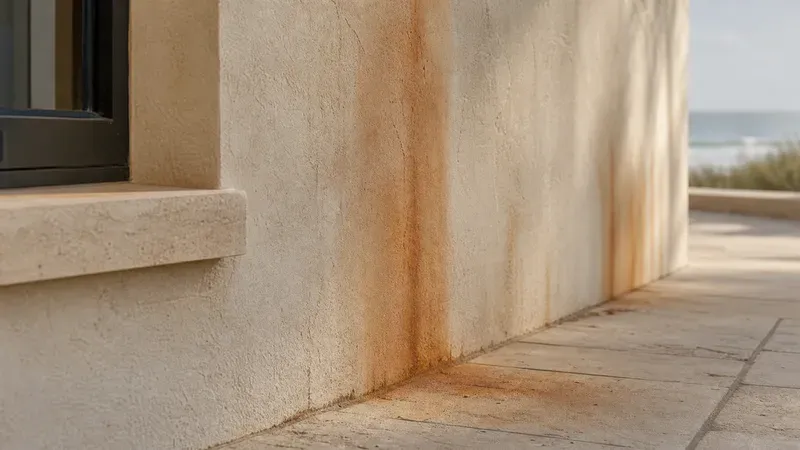
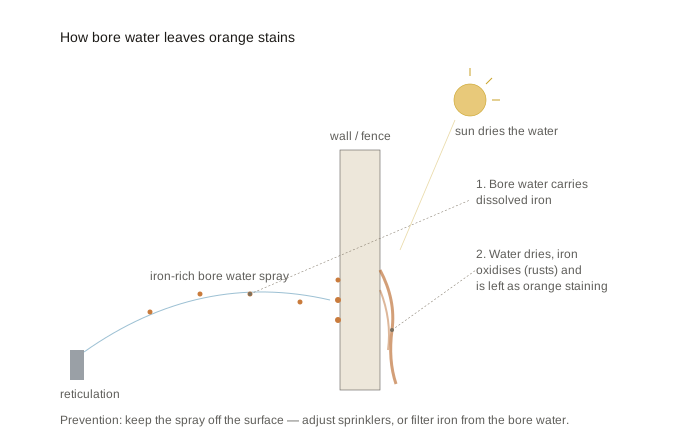
Bore water stains are caused by iron dissolved in the groundwater. Many Perth properties run reticulation from a bore, and that water carries iron. When it sprays onto walls, fences and paving and dries in the sun, the iron oxidises, literally rusts, and leaves orange-brown staining. It's very common in WA, cosmetic rather than structural, and removable.
Why it happens here so much
Across Perth and much of WA, garden reticulation commonly draws from a bore rather than scheme water, it's cheaper for watering. That groundwater is naturally high in iron and minerals. Every time the sprinklers run, fine droplets land on hard surfaces and the sun does the rest: the water evaporates, the iron is left behind and oxidises into rust-coloured marks. Anywhere reticulation spray reaches, limestone walls, rendered walls, Colorbond fences, paving, paths, even the lower courses of brickwork, can pick up the staining. It builds up gradually, so people often don't notice until a wall or fence has a distinct orange tide-line.
Why ordinary washing doesn't shift it
Bore water stains aren't dirt sitting on the surface, they're oxidised iron bonded to it, so a normal wash or a scrub with detergent barely touches them. They need a specific approach: a proprietary rust and oxide remover formulated to dissolve the iron staining, applied to the surface, given time to work, and rinsed off, sometimes more than once for heavy staining. Using the wrong product, or harsh acid carelessly, can damage limestone, render or paint, so matching the treatment to the surface matters.
How to remove bore water stains
- Identify the surface. Limestone, render, paint, Colorbond and paving all tolerate different treatments, the right remover for one can damage another, so this comes first.
- Use a dedicated iron/rust stain remover, an oxalic or specialised rust-removing product designed to dissolve iron staining, not a general cleaner, which won't work.
- Apply, dwell, and agitate gently. Let the product work for the directed time, light agitation helps, but avoid aggressive scrubbing or high pressure that could damage the surface (see soft washing vs pressure washing for why high pressure is risky on render and paint).
- Rinse thoroughly, and repeat for stubborn or built-up staining; heavy tide-lines often need a second pass.
- Take care on vulnerable surfaces. Limestone and some renders and paints can be etched or discoloured by the wrong product or concentration, when in doubt, it's worth getting it done professionally rather than risking the wall.
How to stop bore water stains coming back
Removal is only half the job, because if the reticulation keeps spraying iron-rich water on the same surfaces, the staining returns. Prevention comes down to keeping bore water off the surfaces you care about:
Adjust the sprinklers so spray patterns don't hit walls, fences and paths, redirecting or changing heads is often the single most effective fix.
Iron filters or treatment on the reticulation system can reduce the iron in the water itself, tackling the cause rather than the symptom.
Regular washing keeps light staining from building into entrenched tide-lines, it's far easier to keep on top of than to remove once it's heavy. This is where the staining ties into routine coastal home maintenance, the same regular washing that removes salt keeps bore water marks in check too.
Bore water staining keeps coming back if the cause isn't addressed. Sealing porous surfaces like limestone and exposed aggregate after stain removal also helps resist future iron staining soaking in. A Salt Coast maintenance plan keeps walls, fences and paths free of iron staining and salt together, and can flag where reticulation spray is the culprit so it's fixed at the source.
Common questions
FAQs
What causes orange stains on my walls and fences?
Iron in bore water. Many WA properties run reticulation from a bore, and that groundwater is high in iron. When the spray lands on walls, fences and paving and dries, the iron oxidises into rust-coloured staining. It's very common in Perth and is cosmetic rather than structural.
How do I remove bore water stains?
Use a dedicated iron or rust stain remover, not a general cleaner, matched to the surface. Apply it, let it dwell, agitate gently, and rinse, repeating for heavy staining. Avoid harsh acid or high pressure on limestone, render or paint, which can be damaged, professional treatment is safer on vulnerable surfaces.
Why won't normal washing remove the orange stains?
Because they're not surface dirt, they're oxidised iron chemically bonded to the surface. A normal wash or detergent scrub barely touches them; they need a specific rust-dissolving product designed for iron staining.
How do I stop bore water stains coming back?
Keep iron-rich bore water off the surfaces, mainly by adjusting sprinkler spray patterns so they don't hit walls, fences and paths. An iron filter on the reticulation reduces the iron in the water itself, and regular washing stops light staining building into entrenched marks.
Will bore water stains damage my walls?
They're generally cosmetic rather than structural, the iron staining sits on the surface rather than weakening it. The main issue is appearance, though heavy long-term staining on porous surfaces like limestone is harder to fully remove, which is why dealing with it early and preventing recurrence is worthwhile.