How Often Should Coastal Homes Be Washed?
Coastal homes need washing far more often than inland ones to remove salt. How often to wash your exterior, and why salt makes the difference.
How often should you wash a coastal home?
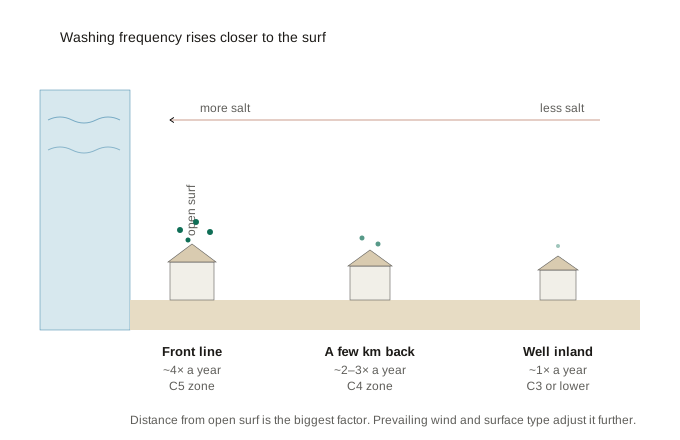
Coastal homes generally need their exterior washed two to four times a year, against once a year or less inland. The reason is salt: it lands constantly and, unlike ordinary dirt, actively damages paint, render and metal the longer it sits. The closer you are to open surf, the more often you need to wash. Check your suburb’s corrosivity zone to see roughly how often that means for you.
It's not about how dirty it looks
The instinct is to wash the house when it looks grubby. On the coast that's the wrong trigger, because the most damaging thing on your walls is invisible. Salt doesn't make a house look dirty the way mud or pollen does; it settles as a fine, often unseen film. By the time visible problems show up, peeling paint, tea-stained metal, bubbling render, the salt has already been doing damage for a while. So coastal washing is preventive maintenance on a schedule, not a response to a dirty-looking house.
Why salt changes the maths
Inland, washing is mostly cosmetic, removing dirt, pollen, cobwebs and the organic growth that makes a house look tired. You can leave it a year or two and the worst that happens is it looks a bit dull. On the coast, salt is constantly landing and it's not cosmetic, it's corrosive. Left on the surface it draws moisture, breaks down paint bonds, feeds corrosion on metal, and soaks into render. Each of those is a repair bill that regular washing prevents. So coastal washing frequency isn't about appearance, it's about how fast salt does damage if you let it accumulate.
What changes how often you need it
A few things move the number within that two-to-four range:
Distance from the surf is the biggest factor. A home in the front row of streets facing open ocean cops a heavy, constant salt load and sits at the higher end. A home a few kilometres back, or sheltered behind other buildings or terrain, gets less and can wash less often. This maps to the AS 4312 corrosivity zones, the standard that grades how aggressive a coastal location is.
Prevailing wind matters, walls and faces pointing into the onshore breeze collect more salt than sheltered sides, so sometimes it's specific elevations rather than the whole house that drive the schedule.
Surface type plays a part, painted and rendered surfaces and outdoor metal are more vulnerable to salt damage and benefit from more frequent washing than, say, face brick.
Growth rate, coastal humidity also speeds mould, algae and lichen, so homes that green up quickly need washing partly to stay on top of that too.
The cost logic
Regular washing always works out cheaper than the alternative, because the alternative is repairs. A few washes a year is a modest, predictable cost. Letting salt accumulate until paint peels, render bubbles or metal corrodes turns a cleaning job into a repainting, re-rendering or replacement job, an order of magnitude more expensive. Washing isn't really a cleaning expense on the coast; it's the cheapest form of property protection you have, which is exactly why it belongs on a schedule rather than left to when you remember.
When you do wash, the method matters as much as the frequency, soft washing rather than high pressure is what keeps frequent washing from wearing the building out.
Coastal homes do best on a washing rhythm matched to their exposure. A Salt Coast maintenance plan keeps salt washed off on the right schedule for how close to the surf you are, so it never accumulates to the point it starts costing you in repairs.
Common questions
FAQs
How often should I wash my house exterior near the coast?
Generally two to four times a year, compared with about once a year inland. The closer you are to open surf, the more often, because salt lands constantly and damages paint, render and metal the longer it sits. Front-line coastal homes sit at the higher end of that range.
Why do coastal homes need washing more often?
Because of salt. Unlike ordinary dirt, salt is corrosive, it draws moisture, breaks down paint bonds, feeds metal corrosion and soaks into render. Removing it regularly prevents damage, whereas letting it build up leads to peeling, corrosion and repair bills.
My house doesn't look dirty, do I still need to wash it?
Yes. The most damaging thing on coastal walls, salt, is largely invisible and doesn't make a house look grubby. By the time visible problems appear, the salt has been doing damage for a while. Coastal washing is preventive and scheduled, not a response to a dirty-looking house.
What's the most important factor in how often to wash?
Distance from open surf. Front-row coastal homes get a heavy, constant salt load and need washing most often; homes further back or sheltered need it less. Prevailing wind direction and surface type also affect how fast salt accumulates on different parts of the house.
Is regular washing really worth the cost?
Yes, because the alternative is far more expensive. A few washes a year is a small, predictable cost; letting salt accumulate until paint peels or render and metal fail turns cleaning into repainting, re-rendering or replacement. Regular washing is the cheapest property protection available on the coast.