Sealing Exposed Aggregate: Complete WA Guide
Why and how to seal exposed aggregate in WA. What sealing does, the finish options, how often to re-seal, and the mistakes that ruin the look.
Should you seal exposed aggregate?
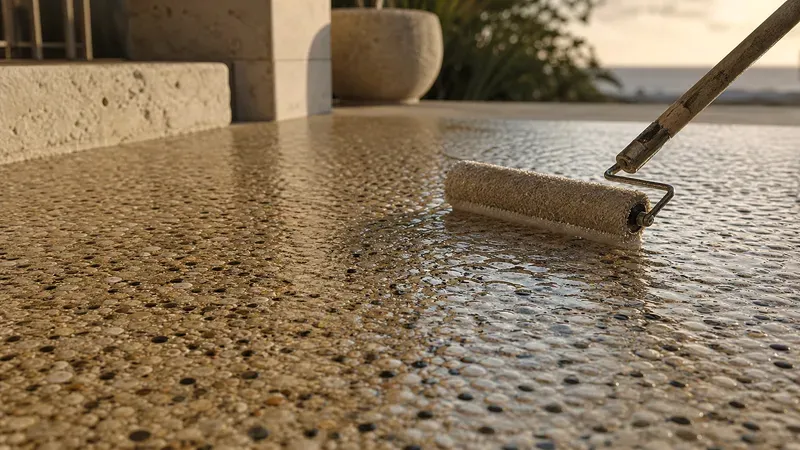
Yes, exposed aggregate should be sealed, and re-sealed periodically, because it's a porous surface that stains and degrades if left bare. Sealing protects the concrete and stone from oil, dirt, bore-water staining and weather, makes it far easier to clean, and can enhance the stone colour. It's the single most effective thing you can do to keep an aggregate driveway looking good and lasting.
What sealing actually does
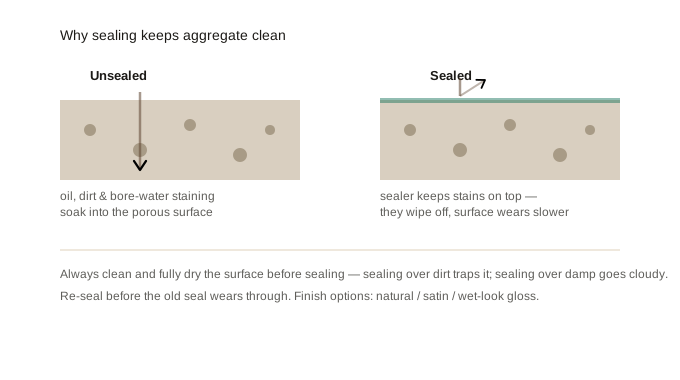
Exposed aggregate is decorative concrete with the top layer washed back to reveal the stones. That surface is porous and textured, lovely to look at, but full of places for oil, dirt and stains to lodge and soak in. A sealer fills and coats the surface so that:
- Stains stay on top instead of soaking in, oil, tyre marks, leaf tannins and bore-water iron staining wipe or wash off rather than penetrating.
- It's easier to clean: a sealed surface rinses clean far more easily than raw aggregate.
- The colour is enhanced or preserved: depending on the sealer, it can deepen the stone colour (a wet-look) or just protect the natural look.
- The surface wears more slowly: the sealer takes the wear instead of the concrete and stones.
Finish options
Exposed aggregate sealers come in different finishes, and the choice is mostly about look:
Natural / matte: protects without much change to appearance, the aggregate looks much as it does dry.
Satin / low-sheen: a slight lift to the colour and a subtle sheen.
Wet-look / gloss: deepens the stone colours noticeably and adds shine, the "always looks freshly hosed" effect many people want, though higher-gloss finishes show wear and can be slicker when wet.
There's also a practical split between penetrating sealers (soak in, very natural, breathable) and film-forming sealers (sit on top, give the wet-look and gloss, more protective but can wear visibly and need more care). The right pick depends on the look you want and where the surface is.
How often to re-seal
Exposed aggregate needs re-sealing periodically, the sealer wears with sun, traffic and weather, and a driveway takes more wear than a sheltered patio. The principle is the same as any sealed surface: re-seal before the old seal wears through, not after. Re-coating a surface that's still protected is straightforward; rescuing aggregate that's been bare and staining for years is a much bigger job.
Mistakes that ruin the look
A few common errors turn a good aggregate surface bad:
- Sealing over a dirty or stained surface: traps the dirt and staining permanently under the sealer. The clean comes first, always.
- Sealing damp concrete: sealer applied to a surface that isn't fully dry can go cloudy or fail to bond. It has to be properly dry.
- The wrong sealer or too much gloss: an over-glossy finish can look artificial, show every mark, and get slippery; the wrong product can peel or discolour.
- Letting it go too long: once the seal's worn through and the surface has stained and degraded, you can't always get it fully back.
Getting it right is mostly about proper cleaning, full drying, the right sealer for the look and location, and re-sealing on time, which is the driveway cleaning and sealing work done properly. WA driveways also commonly use limestone, which is even more porous than aggregate and has its own sealing requirements; the limestone sealing guide covers that.
Sealed properly, exposed aggregate stays looking sharp and shrugs off stains for years. A Salt Coast site visit assesses your surface, cleans and seals it with the right finish, and keeps it on a re-seal cycle so it never gets to the stained, degraded stage.
Common questions
FAQs
Do you need to seal exposed aggregate?
Yes. Exposed aggregate is porous and stains and degrades if left bare, soaking up oil, dirt and bore-water staining. Sealing protects it, makes it far easier to clean, can enhance the stone colour, and slows wear. It's the most effective thing you can do to keep an aggregate driveway or patio looking good and lasting.
How often should exposed aggregate be re-sealed?
Periodically, the sealer wears with sun, traffic and weather, and a driveway wears faster than a sheltered patio. The interval varies with the sealer type and how much use and exposure the surface gets. The key principle is to re-seal before the old seal wears through, since re-coating a still-protected surface is far easier than rescuing bare, stained aggregate.
What finish should I choose, natural or wet-look?
It's about the look you want. Natural or matte protects with little change in appearance; satin lifts the colour slightly; wet-look or gloss deepens the stone colours and adds shine for that freshly-hosed effect. Wet-look is popular but higher-gloss finishes show wear more and can be slicker when wet, so consider where the surface is.
Can you seal exposed aggregate that's already stained?
The stains need removing first. Sealing over existing oil, dirt or bore-water staining locks it in permanently. Proper cleaning and stain treatment comes before sealing, which is why a good job is always clean-first, then seal, never seal over a dirty surface.
Why has my sealed aggregate gone cloudy or patchy?
Usually because it was sealed over moisture (sealer on damp concrete can go cloudy or fail to bond), or the wrong sealer was used, or it was applied over trapped dirt. Fixing it means stripping the failed sealer, properly cleaning and drying the surface, and re-sealing correctly.