Efflorescence: What It Is and How to Fix It
Those white powdery stains on brick or render are efflorescence, salt left behind by moisture. What causes it, how to remove it, and how to stop it.
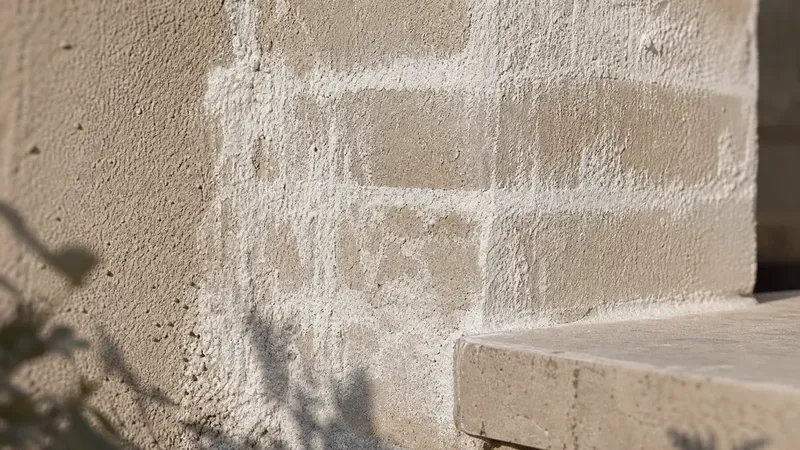
What is efflorescence?
Efflorescence is the white, powdery staining that appears on brick, render and masonry. It's salt, dissolved by moisture inside the wall, carried to the surface, and left behind as a white deposit when the water evaporates. It's very common and usually harmless, but it signals that moisture and salt are moving through the wall.
Where the white stains come from
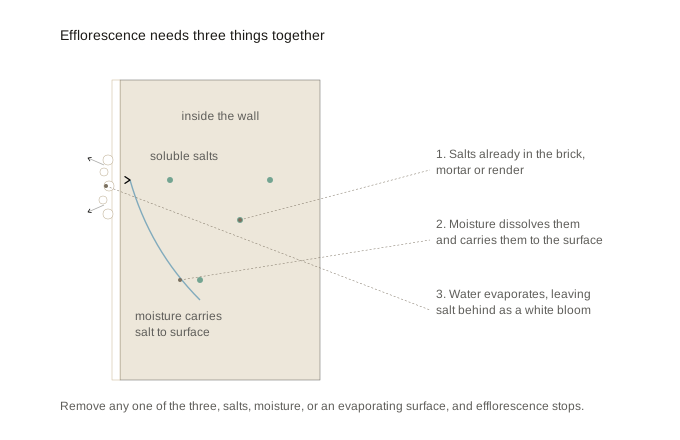
Building materials like brick, mortar, render and concrete naturally contain soluble salts. When water moves through the material, it dissolves those salts and carries them along. When that water reaches the surface and evaporates, the salt can't evaporate with it, so it's deposited as the white bloom you see. Three things have to be present: soluble salts in the material, moisture to dissolve and move them, and a surface for the water to evaporate from. Remove any one and efflorescence stops.
This is why it often appears after rain, or on new masonry (which is still full of construction moisture), or on coastal walls where airborne salt adds to the salt already in the material.
Is efflorescence a problem?
By itself, usually not, it's a cosmetic deposit on the surface and brushes or washes off. But it's a useful warning sign, because it tells you moisture is actively moving through the wall and bringing salt with it. The deposit is harmless; the process behind it isn't always. If the same moisture and salt are also crystallising inside the render or masonry rather than on top, that's salt attack on render, which does cause structural damage (bubbling, flaking, crumbling). So efflorescence is best read as the wall telling you to check what's driving the moisture, not as damage to panic over.
There's also a more serious lookalike worth knowing about: where the salt crystallises just under the surface instead of on top, it's called sub-florescence, and that one does push the surface off as it grows. The white bloom on top is the benign version; the damage happens when the same process moves below the skin.
How to remove efflorescence
- Let it dry first. Efflorescence is easiest to remove dry, and trying to wash it wet can just drive the salt back into the wall.
- Brush it off with a stiff (non-metallic) brush, much of a light bloom comes away with dry brushing alone.
- Wash the area with clean water and allow it to dry fully. For heavier deposits a proprietary efflorescence remover may be needed, but always follow the product directions, some are acidic and can damage the surface if misused.
- Avoid harsh acid washing as a default, on the coast it can etch the surface and, done wrong, can actually draw more salt out. When in doubt this is a job worth getting assessed rather than attacking with chemicals.
- Don't seal a damp wall. Sealing in trapped moisture and salt can cause worse problems (including the sub-florescence that lifts the surface), so the wall needs to be sound and dry first.
Why it keeps coming back
If efflorescence returns after you've cleaned it, the deposit isn't the problem, the moisture pathway is. Something keeps delivering salt-laden water to the surface: rising damp from the ground, a leak, poor drainage, or constant coastal salt soaking in. Cleaning the bloom without addressing the source is endless. Recurring efflorescence is the wall asking you to find and fix the moisture source.
The coastal angle
Near the ocean, walls get a double salt load, the salts already in the masonry, plus airborne sea salt constantly landing on and soaking into the surface. That same coastal salt load drives corrosion across all exposed materials, including stainless steel and metal fittings, which tea-stain and corrode by the same chloride mechanism. So coastal homes tend to see more persistent efflorescence than inland ones, and it's more likely to be an ongoing condition than a one-off post-construction event. Keeping surface salt washed off regularly reduces how much soaks in, which is the practical way to keep recurring efflorescence under control.
Recurring white staining means salt and moisture are still moving through your walls. A Salt Coast maintenance plan keeps coastal salt washed off before it soaks in, and flags the early signs of salt attack before harmless surface bloom turns into render damage.
Common questions
FAQs
What are the white powdery stains on my brick wall?
That's efflorescence, soluble salts from inside the brick, mortar or render that have been dissolved by moisture, carried to the surface, and left behind as a white deposit when the water evaporated. It's very common and usually harmless, but it signals that moisture is moving through the wall.
Is efflorescence harmful to the wall?
The white surface deposit itself is usually just cosmetic and washes off. But it's a warning that moisture and salt are active in the wall. If the salt is also crystallising beneath the surface rather than on top, that can push the surface off and cause real damage, so persistent efflorescence is worth investigating.
How do I remove efflorescence?
Let the area dry, brush the deposit off with a stiff non-metallic brush, then wash with clean water and let it dry fully. Heavier deposits may need a proprietary remover used strictly to directions. Avoid harsh acid washing by default, especially on the coast, as it can damage the surface.
Why does efflorescence keep coming back?
Because the moisture source feeding it hasn't been addressed. Rising damp, a leak, poor drainage or constant coastal salt keeps delivering salt to the surface. Cleaning the bloom without fixing the moisture pathway means it simply returns.
Should I seal the wall to stop efflorescence?
Not before the wall is sound and dry. Sealing a damp, salty wall traps moisture and salt inside, which can cause salt to crystallise beneath the surface and push it off, a worse problem than the surface bloom. The moisture source should be fixed first.