Salt Damage on Rendered Walls: Identification & Treatment
Bubbling, flaking or crumbling render near the coast is usually salt attack. How to identify salt damage on rendered walls, and how it’s treated.
What does salt damage on rendered walls look like?
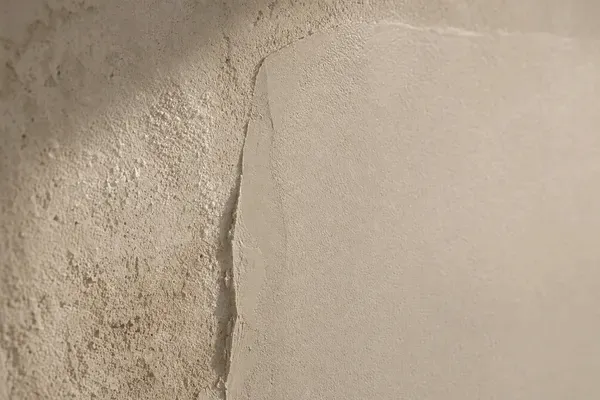
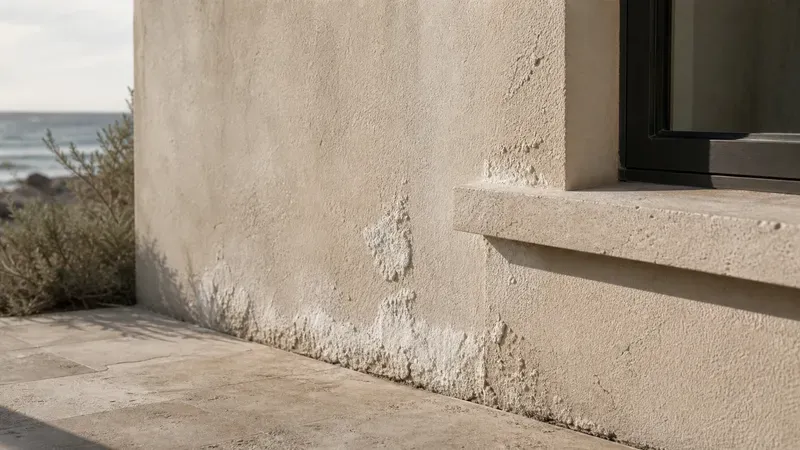
Salt damage shows up as render that bubbles, flakes or crumbles, usually low on the wall, with a powdery residue and paint lifting away. It happens when salt soaks into the porous render and crystallises inside it, and the growing crystals push the render apart from within. Near the coast it's common, and cheaper to treat early.
Why render is vulnerable to salt
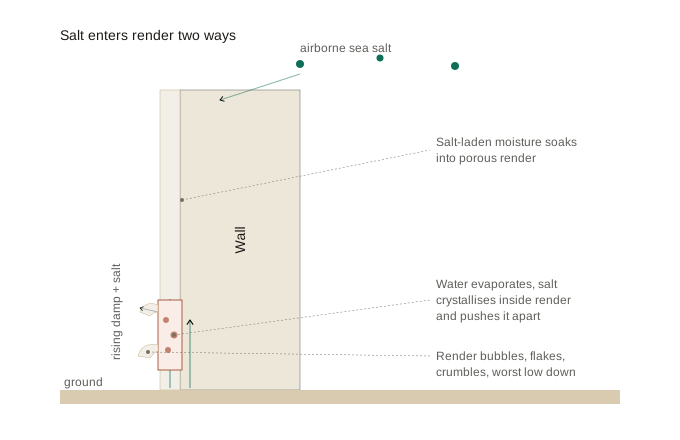
Render is porous, it's designed to let a wall breathe, which means it readily absorbs moisture, and with that moisture, dissolved salt. On the coast salt arrives two ways: airborne sea salt landing on the surface, and salt drawn up from the ground (rising damp) in walls near the soil. Either way, salt-laden moisture soaks into the render. When that moisture evaporates at or just below the surface, the salt is left behind and crystallises. Salt crystals take up more space than the dissolved salt did, so as they grow they exert pressure inside the render, and render has very little tensile strength to resist it. The result is the render breaking up from the inside out.
The tell-tale signs, in order of severity
The mildest sign is a white, powdery bloom on the surface (efflorescence, covered in its own guide), salt that's migrated out and crystallised harmlessly on top. Metal elements embedded in or fixed to walls are not immune either: the same salt driving render damage also accelerates corrosion on stainless steel and other metalwork at the coast. It's a warning, not damage in itself, but it tells you salt is moving through the wall. Next comes paint and the render surface blistering or flaking, as crystallisation just under the skin pushes the outer layer off. More advanced is the render itself becoming friable, crumbly or hollow-sounding when tapped, meaning the salt has broken down its internal structure. The most severe is render detaching from the wall in sheets or chunks, at which point it has to be removed and replaced, not just patched.
Why it concentrates low on the wall
Salt damage is usually worst in the bottom metre or so of a wall, and there's a reason. Ground salts wick upward through the render by capillary action and evaporate at a consistent height, the "evaporation zone", concentrating salt there. So a band of bubbling or crumbling render a half-metre up from the ground is a classic rising-damp-plus-salt signature, distinct from airborne salt damage which tends to be more even or worst on the weather-facing side. Reading where the damage sits helps identify which salt source is driving it, which matters for fixing it properly.
Why painting over it never works
The single most common mistake is treating salt-damaged render as a paint problem, sanding it back and repainting. It always comes back, often within months, because the salt is still in the wall. New paint traps moisture, the salt keeps crystallising underneath, and the fresh coat blisters off just like the old one, the same reason coastal paint peels in the first place. Salt damage is a substrate problem, not a surface one. It can't be painted away; the salt and the moisture pathway feeding it have to be dealt with.
How salt-damaged render is treated
- Identify the salt source. Airborne coastal salt and rising ground damp are treated differently, so the first step is reading the damage pattern to work out what's feeding it.
- Remove the affected render. Render that's blown, friable or detaching has to come off back to sound material, patching over salt-contaminated render just buries the problem.
- Treat the substrate. The wall behind is cleaned of salt and, where rising damp is involved, the moisture pathway is addressed so salt stops being delivered.
- Re-render with appropriate materials. Salt-resistant or breathable render systems suited to coastal exposure, not just standard mix.
- Finish with a suitable coating that lets the wall breathe rather than sealing moisture in.
- Keep salt from rebuilding. Regular washing removes surface salt before it can soak in and start the cycle again, the maintenance step that protects the repair.
The honest coastal truth
The same salt-attack process affects other porous masonry on the coast, limestone in particular soaks up salt-laden moisture and suffers similar crystallisation damage if left unsealed, as the limestone sealing guide explains. Salt-damaged render isn't a one-off fix-and-forget job on the coast, because the salt never stops arriving. Once a wall is repaired correctly, keeping it that way means stopping salt accumulating to the point it soaks back in, which is exactly why coastal homes do better on a maintenance rhythm than waiting for the render to fail again.
Salt-damaged render only gets more expensive the longer it's left. A Salt Coast maintenance plan catches salt attack early and keeps walls washed before salt soaks in and breaks the render down, so you're maintaining sound walls instead of replacing failed render.
Common questions
FAQs
What causes render to bubble and flake near the coast?
Salt. Render is porous and absorbs salt-laden moisture, either airborne sea salt or salt drawn up from the ground. When the moisture evaporates, the salt crystallises inside the render, and the growing crystals push it apart, causing bubbling, flaking and crumbling, usually worst low on the wall.
Can you just paint over salt-damaged render?
No. The salt is in the wall, not on the surface, so painting over it traps the problem and the new coat blisters off again, often within months. Salt-damaged render has to be removed back to sound material and the salt source treated, it can't be painted away.
Why is the damage worse at the bottom of the wall?
Because ground salts wick upward through the render and evaporate at a consistent height, concentrating salt in a band usually within the bottom metre. A zone of bubbling or crumbling render low on the wall is a classic sign of rising damp combined with salt.
Is efflorescence the same as salt damage?
Not quite. Efflorescence, the white powdery bloom, is salt that's migrated out and crystallised harmlessly on the surface. It's a warning sign that salt is moving through the wall, but the structural damage happens when salt crystallises inside the render rather than on top of it.
How is salt damage on render permanently fixed?
By removing the affected render, treating the salt and any moisture source feeding it (such as rising damp), re-rendering with materials suited to coastal exposure, and then keeping surface salt washed off so it doesn't soak back in. Treating only the surface guarantees it returns.